 US Dollar
 Canadian

Opening a restaurant gets expensive fast when the small stuff is missing. Most operators budget for ranges, refrigeration, and maybe the dish machine, then lose time and money chasing basic items after opening week. If you're asking what supplies do new restaurants need, the short answer is this: more than your opening order usually covers, and the right mix depends on menu, volume, service model, and how much downtime you can afford.
The biggest mistake is treating supplies like a single purchase. Some items are one-time equipment buys. Some are weekly replenishment. Some are cheap enough to ignore until they stop service cold, like fryer baskets, cutting boards, sanitizer test strips, or a failed door gasket on a reach-in. A solid opening plan separates those categories so purchasing stays organized.
What supplies do new restaurants need first?
Start with the items tied directly to food production, food safety, and daily service. If a product affects your ability to cook, hold temperature, clean, or serve guests, it belongs in the first wave. Decorative extras, specialty gadgets, and low-use menu tools can wait until you have actual sales data.
Your first pass should cover five operational areas: cooking and refrigeration equipment, prep and storage, warewashing and sanitation, front-of-house service supplies, and replacement parts or maintenance essentials. New restaurants usually overspend in one area and underbuy in another. The underbought area is often smallwares and consumables because those costs are spread across dozens of line items instead of one obvious invoice.
Core kitchen equipment
Capital equipment sets your capacity. This is where menu and footprint matter most. A burger concept, coffee shop, ghost kitchen, and full-service casual restaurant will not buy the same lineup, even at similar sales volumes.
At minimum, most commercial kitchens need core cooking equipment, refrigeration, freezer storage, stainless worktables, sinks, and some form of hot holding or warming. Depending on the concept, that may also include fryers, griddles, charbroilers, convection ovens, microwaves, steam equipment, prep tables, undercounter refrigeration, display merchandisers, or ice machines.
This is also where buying cheap can backfire. The right question is not just purchase price. It is serviceability, parts availability, energy use, and whether the unit fits your projected peak output. A lower-cost piece of equipment that fails during Friday dinner service can cost more than the savings it created.
Ventilation and utility compatibility matter too. New operators sometimes order equipment before confirming gas type, electrical requirements, water filtration needs, or hood capacity. That leads to install delays and expensive change orders. Before placing major equipment orders, match every unit to your site conditions.
Prep tools and smallwares
Smallwares are where kitchens either run smoothly or constantly improvise. You do not need every tool on day one, but you do need enough of the right ones to support prep, line service, and cleanup without bottlenecks.
Most new restaurants need mixing bowls, food storage containers, ingredient bins, sheet pans, steam table pans, cutting boards, knives, tongs, spatulas, ladles, whisks, scoops, scales, thermometers, timers, measuring tools, strainers, and prep utensils in enough quantity to keep pace with washing cycles. Add dunnage racks, speed racks, shelving, and labels if you want storage to stay controlled instead of chaotic.
Par levels matter more than many first-time buyers expect. One pair of tongs per station is not enough. One probe thermometer for the whole kitchen is not enough. One stack of sixth pans disappears quickly in a busy service. Buying too few low-cost items creates labor waste because staff spend time hunting, washing, or sharing instead of producing food.
Food storage and receiving supplies
Storage is operational insurance. Safe receiving, organized storage, and clear product rotation protect both food cost and compliance. New restaurants often buy refrigeration but forget the supplies that make inventory manageable.
That means food boxes and bins, lids, shelving systems, labels, date dots, thermometers for coolers and freezers, ingredient scoops, utility carts, and pallet or floor-clearance storage where needed. If you handle bulk dry goods, leak-prone proteins, or high-volume prep, container selection matters. Standardizing container sizes also helps with stacking, shelf use, and faster prep.
If your operation has frequent deliveries, receiving tools deserve attention. A receiving scale, utility knives, carts, gloves, and clear storage procedures save time and reduce product loss. It sounds basic because it is basic, but basics are what keep inventory accurate.
Cleaning, chemicals, and sanitation
A new restaurant is only as organized as its cleaning program. This is one of the most common blind spots in opening orders. Operators remember soap and sanitizer, then realize they still need dispensers, buckets, brushes, degreasers, floor tools, trash liners, and test strips.
Most kitchens need warewashing chemicals, hand soap, sanitizer, degreaser, delimer, dish machine chemicals if applicable, glass cleaner, restroom supplies, mop buckets, wet floor signs, scrub pads, spray bottles, cleaning cloths, brooms, squeegees, drain maintenance products, and food-safe surface cleaners. Health compliance depends on using the correct chemicals in the correct concentrations, so test strips and proper labeling are not optional.
There is a cost trade-off here. Some buyers chase the lowest chemical price and ignore dilution control or application fit. That can increase waste, damage surfaces, or create inconsistent sanitation results. It is usually better to match products to task and train staff around a simple system.
Dishwashing and warewashing supplies
Even if you have a commercial dish machine, you still need the supporting pieces. Dish racks, bus tubs, pre-rinse components, drain trays, drying shelves, scraping tools, and machine deliming supplies all affect throughput.
Restaurants that serve dine-in also need enough china, flatware, and glassware to survive peak periods plus breakage. Underbuying here creates a chain reaction: rushed dish turns, line delays, and table resets that slow service. Overbuying can tie up cash, so volume forecasting matters. A quick-service concept may need more disposables and fewer warewashing assets. A full-service operation needs more durable table service stock and more dish room support.
Front-of-house and guest service supplies
Front-of-house needs vary by concept, but the basics are easy to overlook when the kitchen side takes all the attention. Tabletop items, host stand supplies, guest checks, POS paper, receipt rolls, condiment holders, menu covers, tray stands, bus carts, aprons, and service towels all have to be in place before the first shift.
For takeout-heavy restaurants, packaging is a major supply category, not an afterthought. Containers, lids, cups, portion cups, bags, napkins, cutlery kits, tamper-evident packaging, labels, and drink carriers should be selected with your menu in mind. Hot foods, fried foods, sauced foods, and cold items all perform differently in the wrong package. The cheapest container is not the cheapest if it leaks, collapses, or hurts order accuracy.
Safety, compliance, and staff basics
Some of the most important supplies never generate revenue directly, but operating without them creates risk. Every new restaurant should account for first aid kits, burn care supplies, PPE, gloves, hair restraints, aprons, slip-resistant mats, fire suppression support items, thermometer calibration tools, and visible signage where required.
Employee-facing basics matter too. Locker or storage solutions, handwashing signage, disposable gloves in correct sizes, and enough uniforms or coats for the team can prevent day-one friction. If your kitchen relies on a constant scramble for gloves, towels, or aprons, labor efficiency suffers before service even starts.
Backup parts and maintenance supplies
This is the category many operators skip until something breaks. That works fine until a cooler door will not seal, a fryer basket handle fails, or an ice machine filtration issue slows service. New restaurants should carry a short list of failure-point items for their actual equipment mix.
That can include door gaskets, knobs, pilot parts, fryer baskets, oven racks, bulbs, water filters, spray valves, casters, thermostats, and OEM-style replacement parts for critical units. You do not need to stock every component, but you do need a plan for the parts that commonly fail or wear out. Fast shipping helps, but having zero backup strategy is still a gamble.
For operators trying to reduce vendor sprawl, sourcing equipment, consumables, and hard-to-find parts through one supplier can save real administrative time. That matters even more for franchises, multi-unit groups, and kitchens with lean management coverage.
What supplies do new restaurants need by opening day versus later?
By opening day, buy what supports production, food safety, cleaning, and guest service immediately. That includes major equipment, core smallwares, sanitation chemicals, storage systems, table service or takeout packaging, and the basic maintenance items you know you will need.
After opening, let actual usage guide secondary purchases. Maybe you need more sheet pans than expected, fewer sauté pans, a better line of squeeze bottles, or heavier takeout containers for one menu item. Real operating data is more useful than guesswork. The goal is not to buy everything. The goal is to buy the right items before they become a problem.
If you are building your first order now, think in terms of uptime. Can you prep, cook, hold, clean, serve, restock, and recover from a minor equipment issue without scrambling? If the answer is no, the list is not finished yet. A well-supplied restaurant does not just open on time. It stays operational when service gets messy.
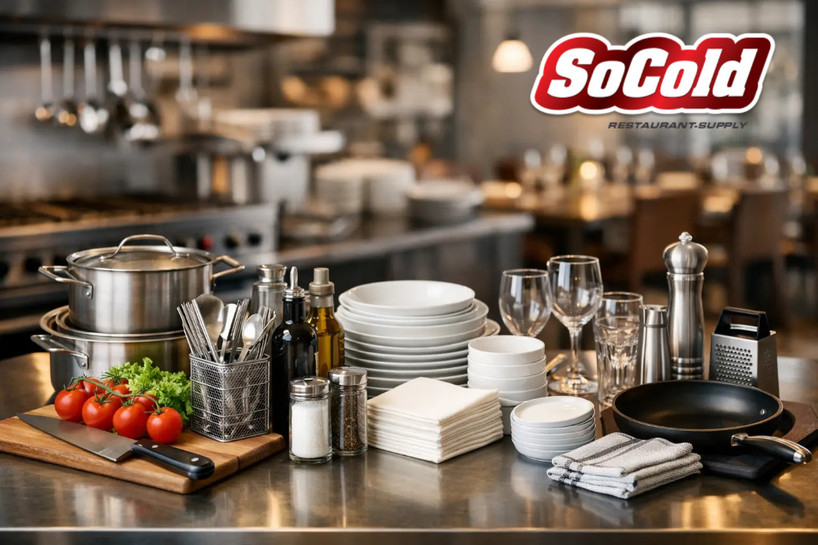
What Supplies Do New Restaurants Need?
Posted by Steve MM on 25th Jun 2026