 US Dollar
 Canadian

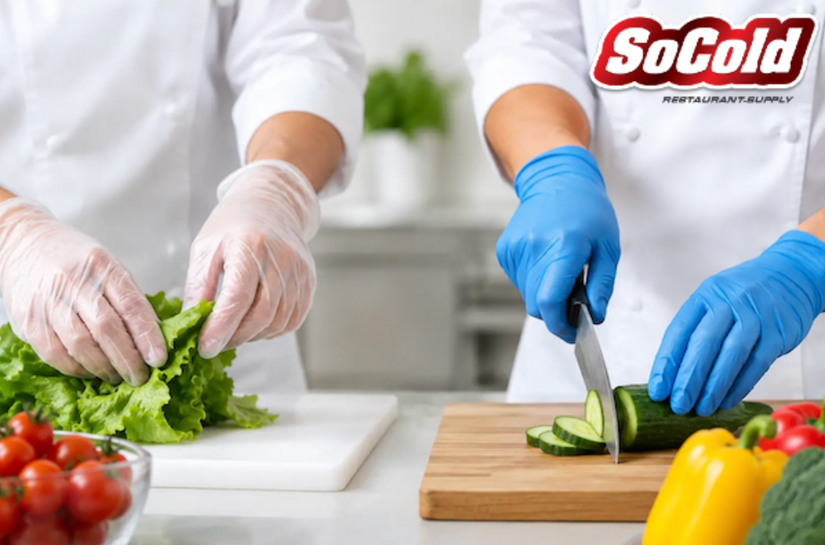
A torn glove during raw-protein prep, a box that runs out halfway through service, or staff using the same glove for multiple tasks can create more than a purchasing problem. When comparing vinyl versus nitrile gloves, foodservice operators need to look beyond box price. The right choice depends on the task, exposure risk, required dexterity, staff usage habits, and the actual cost of changing gloves often enough.
For most kitchens, neither material should be the only glove stocked. Vinyl can control costs for short, low-risk food handling tasks. Nitrile is usually the better working glove for prep, cleaning, and jobs where tears, chemicals, or frequent movement are concerns. Building a practical glove program means assigning each material to the work it handles best.
Vinyl Versus Nitrile Gloves: The Working Difference
Vinyl gloves are generally made from PVC-based material. They are economical, widely used for light-duty food handling, and often provide a looser fit than nitrile. That looser fit can make them easy to put on and remove, which is useful for quick, single-purpose tasks such as handling bakery items, assembling ready-to-eat foods, or changing out a garnish station.
Nitrile gloves are synthetic rubber gloves designed for better stretch, fit, and puncture resistance. They tend to conform more closely to the hand, which gives cooks and prep staff better control when slicing, portioning, opening packaging, or working with wet and greasy products. Nitrile also performs better around many common cleaning chemicals, although operators should still check the glove manufacturer's chemical-resistance guidance for the specific product in use.
Both vinyl and nitrile are commonly available in latex-free options, which helps operations avoid natural rubber latex allergy concerns. Neither material, however, automatically makes a glove appropriate for every task. Food-contact suitability, thickness, powder-free construction, color, sizing, and intended use all matter when selecting a specific product.
When Vinyl Gloves Make Sense
Vinyl is a sensible purchase when the job is brief, low-risk, and does not require a close-fitting glove. Front-of-house food assembly, deli counter tasks, pastry finishing, sandwich wrapping, and handling clean disposable serviceware are common examples. In these situations, the glove is primarily a barrier for a short contact period and is changed immediately when the task changes.
The main advantage is unit cost. A busy operation can go through a significant number of gloves in a week, especially where staff must change gloves between ready-to-eat food tasks, cash handling, cleaning, and raw-food handling. Vinyl can keep routine consumption costs under control when employees do not need high tactile sensitivity or strong puncture resistance.
Its limitations matter. Vinyl has less elasticity than nitrile and can tear more easily when stretched. It may also fit loosely at the fingertips, reducing control during detailed prep. Avoid relying on vinyl for extended wear, aggressive scrubbing, handling sharp-edged packaging, or work involving raw proteins where a damaged glove may go unnoticed.
Vinyl is also not a shortcut around safe handling procedures. Gloves should be changed after touching raw food, equipment handles, phones, money, face or hair, trash, chemicals, and any non-food-contact surface. A low-cost glove becomes expensive if staff use it too long and create cross-contamination risks.
Where Nitrile Gloves Earn Their Higher Cost
Nitrile is usually the stronger operational choice for back-of-house work. Its better fit and durability make it useful for line prep, meat and poultry handling, seafood prep, produce processing, portioning, catering production, and other tasks involving repeated hand movement. Staff working fast can feel the difference between a glove that shifts on the hand and one that stays in place.
For janitorial and dish-area support, nitrile is commonly preferred over vinyl because it provides better resistance to punctures and many chemicals. That does not mean a standard disposable nitrile glove replaces a chemical-specific glove. High-concentration degreasers, sanitizer solutions, oven cleaners, and long-duration washdown work may require a heavier reusable glove selected for that chemical and exposure time.
Nitrile is also a better fit where product quality and presentation depend on control. Decorating pastries, handling small ingredients, plating, cutting, or working on a high-volume prep table all benefit from a glove that allows staff to maintain a natural grip. The material's durability can reduce mid-task glove changes caused by tears.
The trade-off is purchase price. Nitrile typically costs more per glove than vinyl, particularly in heavier gauges or specialty colors. But the cheaper box is not always the lower-cost option. If vinyl gloves tear frequently, require repeated double-gloving, or slow down a prep crew, the savings can disappear quickly.
Match Glove Thickness and Color to the Job
Material is only one purchasing decision. Thickness affects how a glove performs. A thinner glove can improve touch sensitivity for food assembly and detailed prep, while a heavier glove can provide more durability for cleaning, greasy work, or handling bulky items. Thicker is not always better, though. Overbuilt gloves can make staff less likely to change them frequently, which defeats the purpose of using disposables.
Color can support better task control. Blue nitrile gloves are popular in food production because a torn piece is easier to spot in many food products. Black gloves are common for barbecue, deli, and open-kitchen service where appearance matters. Clear vinyl gloves are often used for general food handling. Use color coding only if it supports a simple policy employees can follow consistently, such as one color for ready-to-eat food prep and another for cleaning duties.
Powder-free gloves are generally the practical choice for commercial kitchens. Powder can transfer to food, leave residue on equipment, and create unnecessary housekeeping issues. Textured fingertips can also help with grip when handling wet containers, film wrap, or oily products.
Build a Glove Policy Around Tasks, Not Preferences
Kitchen teams often select gloves based on what feels comfortable, but purchasing decisions should start with a task map. Identify where gloves are used, how long they are worn, what employees touch, and what happens if the glove tears. This prevents using premium nitrile for low-risk jobs while relying on vinyl where durability is necessary.
A basic foodservice glove program usually separates ready-to-eat food handling, raw-protein prep, cleaning and chemical handling, and utility work. Ready-to-eat assembly may be well served by vinyl or light nitrile, depending on the task. Raw-protein prep usually calls for nitrile because of fit and durability. Cleaning requires nitrile or a heavier reusable chemical glove based on the product being used. Utility work may require cut-resistant gloves, heat-resistant gloves, or other PPE rather than disposable exam gloves.
Sizing is another operational issue. Gloves that are too large reduce dexterity and catch on tools. Gloves that are too small fatigue hands and tear at the cuff or fingertips. Stocking multiple sizes is not a luxury for a professional kitchen - it is part of getting the expected performance from the product.
Train staff to wash and dry hands before putting on gloves, change gloves between tasks, and remove them without contaminating clean surfaces. Gloves are a food-contact barrier, not a replacement for handwashing. Managers should also make glove dispensers easy to reach at prep tables, service stations, dish areas, and cleaning supply points. If employees have to walk across the kitchen to get a fresh pair, compliance drops during a rush.
Control Cost Without Cutting the Wrong Corner
The most useful metric is not just cost per case. Track how many gloves each station uses, why gloves are being changed, and where tear rates are highest. A prep department that uses nitrile efficiently may cost less overall than one burning through vinyl gloves and losing time to failures.
Standardizing on a small number of glove types can simplify purchasing and prevent emergency substitutions. For many operations, that means keeping a cost-effective vinyl option for quick, clean food-contact tasks; a dependable nitrile glove for prep and general back-of-house work; and a separate reusable glove for heavier chemical or utility applications. This gives staff the right tool without filling storage space with overlapping products.
Check product specifications before placing a large order. Confirm food-contact suitability, glove material, size range, glove count, thickness, powder-free status, cuff length, and any chemical-use claims. For multiunit operators, keeping the same glove specifications across locations can make training, replenishment, and quality control easier.
The best glove choice is the one staff can use correctly every shift. Keep vinyl where speed and low cost are enough, put nitrile where fit and durability protect the work, and make fresh gloves available wherever the next task begins.