 US Dollar
 Canadian

Friday dinner rush usually exposes the weak link fast. A lid pops in transit, fried food traps steam and goes limp, or a stack of bowls eats up more shelf space than expected. When you are buying takeout containers for restaurants wholesale, the decision is not just about unit cost. It affects food quality, labor speed, storage, order accuracy, and guest complaints.
For most operators, container purchasing works best when treated like an operating decision, not a one-time supply buy. The right setup depends on your menu, order volume, holding time, delivery mix, and how much variation your staff can handle during service. Cheap containers can get expensive if they slow packing lines or increase remakes. Premium containers can also be the wrong choice if you are paying for performance your menu does not need.
How to buy takeout containers for restaurants wholesale
Start with the food, not the catalog. A burrito bowl, a breaded chicken sandwich, ramen, and a slice of cheesecake all need different performance. Heat tolerance matters for hot entrees, but venting may matter more for fried foods. A tight leak-resistant seal is critical for sauced items, while stackability may be the deciding factor for high-volume prep and staging.
The mistake many buyers make is trying to force one container across the whole menu. Standardization helps with purchasing and storage, but over-standardizing creates service problems. A better approach is to reduce the assortment to a practical core - usually a few container formats that cover most of the menu, plus a small number of specialty pieces for problem items.
If your operation runs dine-in, catering, and third-party delivery at the same time, that matters too. Delivery orders usually need stronger sealing and better temperature hold because the food spends more time off-site. Pickup may allow more flexibility. Catering often rewards containers that are easier to carry, stack, and identify in larger counts.
Material choice affects cost and performance
There is no single best material. Each has a trade-off, and the right answer depends on what leaves your kitchen every day.
Foam remains common because it is light, affordable, and insulates well. For hot takeout, it often does the job at a low cost. The downside is perception, local packaging restrictions in some markets, and less rigidity compared with some other options.
Plastic containers work well when visibility matters, especially for cold foods, deli items, desserts, and prepared meals. They can also be a strong option for sauces and soups when paired with the right lid. But not all plastics handle heat the same way, and not every lid seals equally well. For microwave use, heat tolerance and product specs matter.
Paper and fiber containers are often selected for their appearance or compliance requirements, but performance varies widely. Some hold up well with dry or lightly sauced foods. Others need coatings or matching lids to manage grease, moisture, or extended hold times. If your menu includes oily, wet, or very hot items, test aggressively before switching.
Aluminum works for certain hot foods and oven-friendly applications, especially catering trays and baked items. It is durable and familiar, but it is not ideal for every grab-and-go format, and lid fit can make or break usability.
The practical point is simple: buy for your menu behavior, not packaging trends.
Match container style to menu category
Clamshells are efficient for burgers, sandwiches, combo meals, and many casual takeout formats. They are fast to pack and easy for staff to close. The trade-off is that they are not always the best option for foods that need separation or venting.
Multi-compartment containers help with portion control and keep sides from mixing into entrees. They are useful for meal programs, school or institutional service, and operations where presentation still matters after transport. The trade-off is cost and storage footprint.
Round and rectangular deli containers handle soups, sauces, sides, and prep storage well. They are versatile, especially when one lid fits multiple sizes. That common-lid setup can reduce confusion at the line and simplify reordering.
Hinged containers save time because the lid is attached, which matters in fast service. Two-piece systems can offer a tighter seal or better visibility, but they add another component for staff to manage. If your line is already crowded, that extra step matters more than it looks on paper.
Capacity planning matters more than most buyers expect
Container size errors create waste in both directions. Oversized containers make portions look small, allow food to shift in transit, and increase freight and storage costs. Undersized containers create poor presentation, lid failure, and overfilled orders.
A practical way to buy is to map your top-selling menu items by actual fill volume, not rough estimates. Then check how those items behave after lidding. Rice bowls settle differently than pasta. Fried appetizers need headspace. Sauced dishes may need extra room to avoid spills under movement.
If you run combo meals, test the full packed order, including bag fit. A perfect container can still be the wrong buy if it does not stage cleanly with cups, condiment cups, cutlery, and carryout bags.
The hidden costs are in labor, storage, and complaints
Wholesale pricing matters, but invoice price is only part of the cost. Containers that nest poorly slow down pack-out. Lids that stick together frustrate staff. Odd case packs can create backstock problems in small kitchens. Breakage, leakage, and wrong-size substitutions all create labor waste.
Storage is another real constraint. Many operations do not have room for a broad packaging mix, especially if dry storage already carries chemicals, paper goods, disposables, and cleaning supplies. Buying takeout containers for restaurants wholesale should reduce replenishment frequency without creating a stockroom problem. That usually means balancing case quantity with turn rate and shelf space.
Complaints also have a cost. If guests regularly receive soggy fries, leaking soup, or collapsed salad lids, the packaging is no longer a supply issue. It has become a customer retention issue.
What to test before you commit to a case buy
A short trial beats a large mistake. Before locking in a wholesale quantity, run a real service test with your most difficult menu items. Use the container under heat lamps if that is part of your workflow. Send orders through pickup and delivery. Stack them. Bag them. Let them sit for the average travel time.
Watch for lid security, condensation, grease soak, sidewall strength, and how easy the container is to fill quickly. Ask line staff what slows them down. Ask expo what gets mixed up. Ask delivery or front counter staff which formats travel badly.
This is also where standardization decisions become clearer. Sometimes one slightly more expensive container replaces two weaker formats and lowers overall complexity. Sometimes the cheaper option is perfectly fine for half the menu, and that is the right answer too.
Purchasing strategy for chains, independents, and institutions
Independent restaurants usually need flexibility. Storage is tighter, menu changes happen faster, and purchasing may be handled by one owner or manager covering multiple roles. In that setup, dependable stock availability and practical case sizes matter as much as unit price.
Multi-unit operators and franchise groups usually benefit more from SKU discipline. Fewer container types simplify training, ordering, transfers between locations, and compliance with brand standards. The bigger the footprint, the more valuable consistency becomes.
Institutional buyers often have another layer of requirements around portion control, transport, compliance, or volume forecasting. For them, the best packaging program is usually the one that reduces exceptions. The goal is fewer surprises in service, fewer substitutions, and easier replenishment across departments.
This is where a broad-line supplier can save time. If you are already sourcing chemicals, disposables, smallwares, and replacement parts from one place, packaging becomes easier to manage as part of the wider operating supply picture rather than a separate purchasing scramble.
When it makes sense to change containers
Do not switch just because pricing moved a few cents. Change when the current setup is clearly hurting operations. That may mean repeated leaks, menu expansion, new delivery volume, storage pressure, or local packaging requirements that force a new material.
It also makes sense to review takeout packaging when food cost and labor are under pressure. Sometimes the best savings come from simplifying the assortment, improving pack speed, or reducing order failures rather than chasing the lowest-cost case.
A good wholesale buy should hold up in service, fit the menu, and be easy to reorder without second-guessing. If your containers help the kitchen move faster and the food arrives the way it left the pass, that is usually the right place to stay.
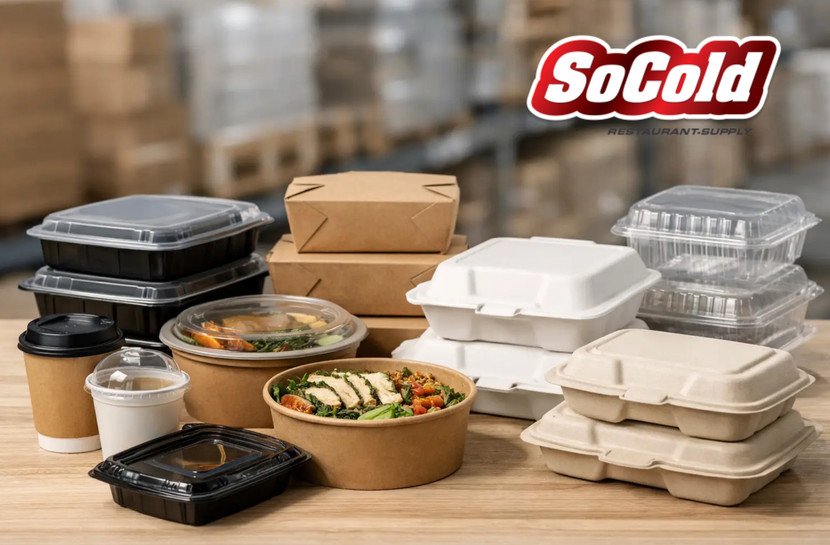
Takeout Containers for Restaurants Wholesale
27th May 2026