 US Dollar
 Canadian

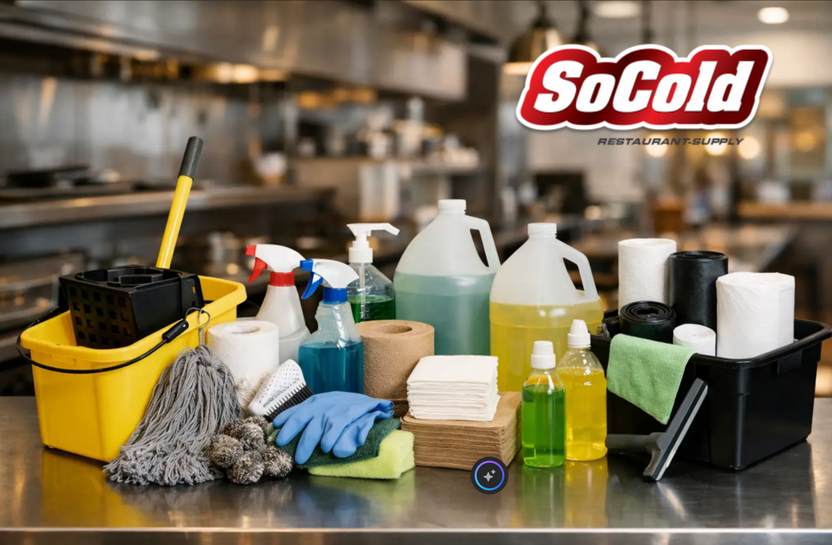
A sanitizer bucket running low during lunch prep is not a minor inconvenience. It slows production, creates compliance risk, and forces managers to pull time away from service just to chase basic stock. That is why restaurant janitorial supplies wholesale purchasing matters. For most foodservice operations, cleaning and sanitation supplies are not side categories. They are daily-use operating essentials tied directly to labor efficiency, food safety, and cost control.
The mistake many operators make is treating janitorial buying as a simple commodity purchase. Sometimes it is. A case of trash liners is a case of trash liners until the gauge is too thin, the bag tears in the middle of a rush, and your team double-bags everything to compensate. Wholesale buying works best when the product spec matches the actual job in your building.
What wholesale really means for restaurant cleaning supply buying
In practical terms, restaurant janitorial supplies wholesale purchasing is about buying for continuity, not just price. Yes, case pricing matters. But the bigger value is having the right mix of chemicals, paper products, floor care items, restroom supplies, and waste handling products available before a shortage turns into an operational problem.
For independent restaurants, that often means consolidating repeat-use items into fewer orders and reducing emergency runs to local stores. For chains, commissaries, schools, healthcare kitchens, and larger hospitality groups, it usually means standardizing SKUs across locations so teams use the same products the same way. That standardization affects training, storage, safety, and invoice control.
Wholesale also creates a better framework for comparing cost per use instead of cost per unit. A cheaper degreaser that requires more product per application is not cheaper in practice. The same goes for low-capacity hand soap refills, poor-quality paper towels, or liners that fail under normal loads.
The categories that matter most
A restaurant's janitorial program usually breaks into a few core groups, and each one affects a different part of the operation.
Chemicals cover warewashing support, surface sanitizing, degreasing, restroom cleaning, glass care, floor cleaning, and odor control. Some kitchens need concentrated products for cost control and storage efficiency. Others benefit from ready-to-use formats that reduce mixing errors and training issues. It depends on staff consistency, safety procedures, and how much product turnover the location has.
Paper products and dispensers are another high-volume area. Paper towels, toilet tissue, napkins for support areas, and hand soap refills seem routine until one mismatch creates waste or customer complaints. Dispenser compatibility matters more than buyers sometimes expect, especially across multi-unit operations trying to limit SKU creep.
Floor care is its own category because kitchens punish flooring every day. Wet areas, grease, tracked-in debris, and constant traffic require more than a generic mop and bucket. Mop heads, handles, wringers, deck brushes, floor squeegees, warning signs, and mat-related cleaning tools all support safety as much as cleanliness.
Waste handling products are where cost cutting can backfire fast. Trash liners need to match can size, waste type, and load weight. Foodservice locations often deal with wet waste, broken-down boxes, prep debris, and heavy disposal cycles. Under-specifying liners may save money on paper while increasing labor and mess.
Restroom supplies matter too, even for operators focused mostly on the kitchen. Guest-facing cleanliness affects perception immediately, and back-of-house restrooms still need reliable stock and chemical coverage. A wholesale supply plan should cover both front and back of house without treating them as identical spaces.
How to buy restaurant janitorial supplies wholesale without overbuying
The right order volume depends on usage rate, storage conditions, and delivery reliability. Buying deeper on fast-turn consumables makes sense if you have stable usage and secure storage. Buying too deep on niche chemicals or oversized paper inventory can create clutter, expire shelf life, or tie up cash.
Start with movement. What gets used every day, every week, and only occasionally? Daily-use items like sanitizer, hand soap, paper towels, gloves in janitorial applications, and liners should be watched closely. Slow movers should be purchased more carefully unless they are mission-critical backup items.
Then look at pack size versus building layout. A case price may look good, but if your team has to break down every shipment into awkward storage areas, the labor cost is real. The same applies to concentrated chemicals. They often lower cost per use, but only if your staff can dilute them correctly and your operation has the right dispensing setup.
Another factor is seasonality. Patio service, holiday traffic, school calendars, and flu season can change janitorial consumption significantly. Operators who buy on a flat monthly average often end up short during peaks and long during slow periods.
Where buyers lose money
The biggest losses rarely come from the invoice line everyone notices. They come from misuse, inconsistency, and product mismatch.
One common problem is too many overlapping SKUs. If one location uses three different degreasers for the same job, purchasing loses leverage and staff loses clarity. Simplifying the approved product set usually improves both cost and compliance.
Another issue is buying based only on unit price. Low-cost mops that need frequent replacement, weak spray bottles, or dispensers with poor refill availability create recurring friction. In a commercial kitchen, durability matters because the environment is hard on everything.
There is also the labor side. If a product is difficult to store, confusing to use, or unreliable in performance, your team spends extra minutes compensating for it every shift. Spread across weeks and multiple employees, that hidden cost gets larger than a modest difference in wholesale price.
Choosing the right supplier for restaurant janitorial supplies wholesale
A good supplier is not just a source of cases. For restaurant janitorial supplies wholesale, the real test is whether buyers can source core consumables, specialty cleaning items, and related operational products without wasting time across multiple vendors.
That matters because janitorial purchasing rarely lives alone. The same operation buying floor cleaner may also need replacement spray valves, disposable foodservice items, plumbing basics, warewashing support, or equipment parts in the same week. Consolidation helps procurement teams move faster and reduces the administrative drag of fragmented ordering.
Depth of inventory matters as much as breadth. A supplier with a broad catalog but thin stock can still leave you exposed. Buyers need practical category coverage that reflects how restaurants actually operate, including everyday staples and harder-to-find items that keep maintenance and sanitation programs on track.
Shipping speed matters too, especially when a location is trying to recover from an unexpected stockout or equipment-related cleaning issue. For many operations, the value of a supplier is measured less by marketing claims and more by whether the needed item is available and ships when promised.
Standardization versus flexibility
There is a trade-off between strict standardization and location-level flexibility. Chain operators usually benefit from fixed product lists because training is simpler and purchasing has cleaner control. Independent operators may prefer more flexibility because building layouts, menu formats, and staffing patterns vary more.
Neither approach is automatically better. A busy quick-service location may need a different towel format or degreasing setup than a full-service restaurant with a bar program and larger dining room footprint. The goal is to standardize where performance is consistent and allow exceptions where the operating environment clearly justifies them.
This is where experienced buyers tend to outperform reactive buyers. They do not just ask what the product costs. They ask where it will be used, who will use it, how often it will be replaced, and what failure looks like if the item does not perform.
Building a cleaner, faster reorder process
The best janitorial purchasing system is boring in a good way. Core items should be easy to reorder, easy to receive, and easy for staff to identify in storage. Naming conventions should match what kitchen managers and maintenance teams actually call the products. If the catalog structure helps buyers find chemicals, paper goods, floor care, disposables, and related operational items quickly, reordering becomes less disruptive.
This is also where a broad-line supplier can make a difference. When the same source supports consumables, replacement parts, cleaning chemicals, and everyday operational stock, buyers spend less time switching between vendors and more time managing the business. That is especially useful when an urgent repair and a routine restock happen at the same time, which in foodservice is fairly normal.
For operators trying to tighten spend without risking sanitation gaps, the smartest move is usually not buying the cheapest option. It is buying the right product, in the right pack size, from a supplier set up for repeat commercial demand. If your janitorial order process feels like a weekly fire drill, that is usually a supply structure problem, not just a purchasing problem