 US Dollar
 Canadian

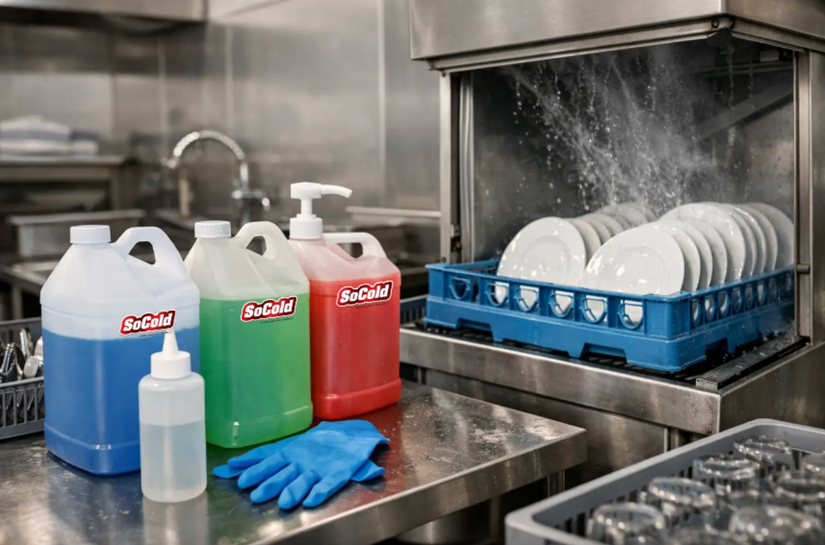
If your warewashing results suddenly go bad, the machine is not always the first problem to blame. Restaurant dishwashing machine chemicals have a direct effect on sanitation, drying, spotting, lime buildup, and the life of your machine. When the chemistry is off, even a well-maintained dishmachine can turn out cloudy glasses, greasy plates, and repeat wash cycles that waste labor and utilities.
For most operators, the goal is simple: clean wares, pass inspection, protect equipment, and keep costs under control. The problem is that dishmachine chemicals are rarely one-size-fits-all. Water hardness, machine type, incoming soil load, local code requirements, and dispenser setup all change what works best.
What restaurant dishwashing machine chemicals actually do
Commercial dishmachines rely on a chemical system, not just hot water and cycle time. In a standard setup, you are usually working with detergent, rinse aid, and in many low-temp applications, sanitizer. Some operations also need delimers or descalers to handle mineral buildup.
Detergent does the heavy lifting. It breaks down grease, food soil, starch, and protein so the wash cycle can remove them from plates, pans, utensils, and glassware. If detergent strength is too low, wares come out dirty. If it is too aggressive for the application, it can increase operating cost and in some cases contribute to residue or surface wear.
Rinse aid handles a different problem. It lowers water surface tension so rinse water sheets off instead of clinging to the surface. That matters because clinging water leaves spots, streaks, and slow drying times. In high-volume service, poor drying means racks stack up fast and staff start towel drying, which adds labor and can create sanitation issues.
Sanitizer is required in many low-temp machines because those units do not rely on high final-rinse heat alone to sanitize wares. The exact sanitizer type and concentration matter. Too little creates a compliance problem. Too much can damage wares, create odor issues, or leave residue.
Choosing chemicals by machine type
The right chemical program starts with the machine. A high-temp conveyor machine, a low-temp undercounter unit, and a door-type dishmachine do not all run the same chemistry.
High-temp dishmachines
High-temp machines use heat as the primary sanitizing method, so the chemical package usually centers on detergent and rinse aid. In these systems, rinse aid performance becomes especially noticeable on glassware and flatware. If your final rinse temperature is correct but you still see spotting, the issue may be rinse chemistry, hard water, or scaling inside the machine.
High-temp setups often work well in heavier soil environments, but they are not immune to chemical problems. Wrong detergent selection can still leave protein films, starch residue, or excessive foam. Foam is more than a cosmetic issue - it can interfere with wash action and slow production.
Low-temp dishmachines
Low-temp machines depend on chemical sanitizing, so the sanitizer is just as critical as the detergent. These units are common where ventilation, utility cost, or machine size makes high-temp less practical. They can be effective, but only if the sanitizer feed is properly calibrated and compatible with the rest of the chemical program.
This is where operators run into avoidable trouble. A low-temp machine with inconsistent chemical draw can look like a machine failure when the real issue is a blocked pickup tube, worn tubing, empty product container, or incorrect dispensing rate.
Glasswashers and specialty warewashing
Glasswashers usually need chemistry that controls spotting without being too harsh on delicate surfaces. Bar operations often deal with lipstick, sugar, fruit acid, and fast turnover, which puts more pressure on rinse performance. In these applications, dialing in chemical concentration is often the difference between clear glasses and constant rewashing.
Water quality changes everything
If you only look at the label and not your water, you are guessing. Hard water affects how detergent performs, increases scale, and makes rinse issues worse. Soft water changes chemical demand in the other direction and may require different concentration settings to avoid excess product use.
Iron content and total dissolved solids can also create staining or film that staff may mistake for poor cleaning. In many kitchens, the real fix is not a stronger detergent. It is matching the detergent to the water condition and keeping water treatment equipment in working order.
This is why a chemical that performs well in one store may disappoint in another location in the same chain. A standard product list helps purchasing, but site conditions still matter.
Common problems and what they usually point to
Cloudy glasses often suggest hard water scale, poor rinse aid performance, or mineral-heavy incoming water. Greasy plates usually point to weak detergent concentration, overloaded racks, poor pre-scrapping, or wash temperature issues. White residue can mean detergent overfeed, hard water deposits, or poor rinse action.
If wares smell like chlorine, sanitizer concentration may be too high in a low-temp machine. If dishes are technically clean but dry slowly, rinse aid or final rinse performance is the first place to look. If machine interiors build up white crust, deliming is overdue or the water treatment setup is not keeping up.
These issues overlap, which is why swapping chemicals blindly can get expensive. A stronger product is not always the right product.
Restaurant dishwashing machine chemicals and cost control
Operators usually notice chemical cost on the invoice, but the bigger cost often shows up elsewhere. Bad chemistry increases rewashes, labor time, water use, energy use, broken glass from handling delays, and service calls chasing symptoms instead of causes.
A cheaper detergent can cost more if it requires higher feed rates or leaves enough residue to trigger extra deliming and machine maintenance. On the other hand, paying for an overly specialized product when your water and soil load do not require it is also wasteful. The best program is the one that gets consistent results at the right concentration with minimal adjustment.
For multi-unit operations, standardizing approved chemicals where possible makes training and replenishment easier. For independent operators, keeping a small but correct set of products on hand usually works better than buying miscellaneous substitutes during emergencies.
Storage, handling, and compatibility matter
Dishmachine chemicals are operational supplies, but they are still concentrated chemicals that need proper handling. Containers should stay labeled, closed, and stored where staff can access them safely without mixing products or grabbing the wrong pickup line.
Compatibility matters too. Not every detergent pairs well with every sanitizer or dispenser setup. Changing one product without checking the full system can create feed issues, poor results, or damage to machine components. Service techs see this all the time after a rushed substitution.
If your machine uses a chemical dispensing system, inspect tubing, strainers, injection points, and pickup lines regularly. Chemical supply failures are often mechanical at the dispenser level, not chemical defects.
When to use delimers and descalers
Deliming is not optional in hard water environments. Mineral scale reduces heating efficiency, affects spray performance, restricts internal flow, and shortens component life. It can also interfere with final rinse temperatures and leave deposits on wares that look like washing failures.
How often you delime depends on water condition and machine use. A high-volume kitchen with hard water may need frequent attention, while a lower-volume site with treated water can go longer. The mistake is waiting until buildup is visible. By that point, performance has already dropped.
Any deliming product used in warewashing areas should be matched to the machine manufacturer guidance and the material surfaces involved. Too aggressive, and you create another maintenance problem.
How to buy the right restaurant dishwashing machine chemicals
Start with the machine model and sanitation method. Then look at your water condition, ware type, average soil load, and whether you are trying to solve a specific issue like spotting, scale, or poor drying. That narrows the field quickly.
Next, look at package size and replenishment speed. Running out of dishmachine detergent during service is an operations problem, not just a purchasing issue. Buyers who source chemicals, replacement parts, and warewashing supplies from one place usually lose less time, especially when a dispenser tube, cap, or pickup component also needs replacement.
This is where a broad-line supplier such as SoCold Products can make practical sense. If the goal is uptime, it helps to source chemicals alongside machine parts, accessories, and back-of-house essentials instead of splitting routine orders across multiple vendors.
Finally, train staff on what normal results look like. The person loading racks or changing containers is often the first to spot a chemical feed issue. A quick response there prevents a full shift of rewashes.
The best chemical program is not the strongest one or the cheapest one. It is the one that fits your machine, your water, and your volume well enough that nobody has to think about it during service.