 US Dollar
 Canadian

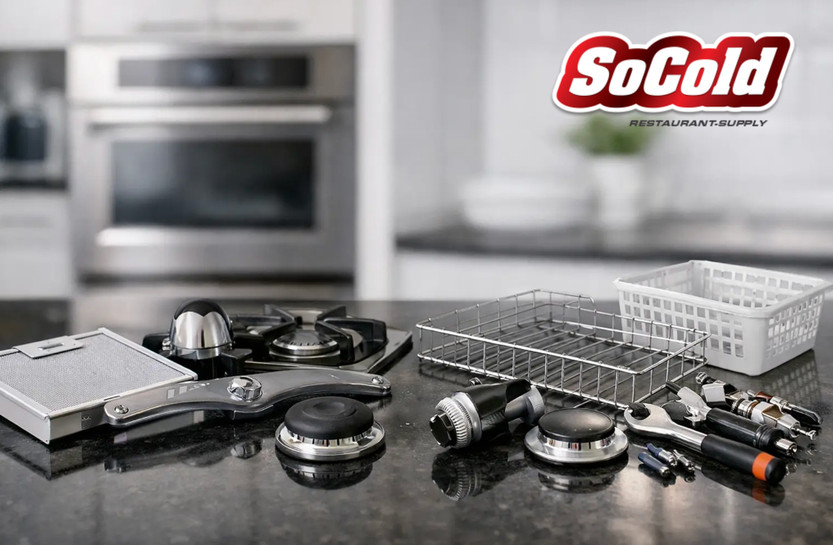
A failed door gasket, ignition module, water valve, or fan motor can turn a normal service day into a costly problem fast. When ordering a replacement, the decision between OEM parts versus universal replacements is not just about the line-item price. It affects fit, installation time, equipment performance, safety, warranty exposure, and how quickly the kitchen gets back to full capacity.
For commercial foodservice equipment, the right answer depends on the part, the equipment model, and the consequences of a repair failure. An OEM component is often the lowest-risk choice. A universal replacement can be the practical option when specifications match and downtime or budget is the bigger concern. The key is knowing where each option belongs.
OEM Parts Versus Universal Replacements: The Basic Difference
OEM stands for original equipment manufacturer. An OEM replacement is designed or approved for a specific equipment brand, model, and often a particular production series. It is intended to match the original component's dimensions, materials, electrical characteristics, mounting points, and operating requirements.
A universal replacement is built to work across multiple makes or models. It may be a direct substitute for a common component such as a thermostat, capacitor, fan motor, heating element, pilot assembly, hose, or drain valve. Some universal parts are high-quality commercial components from established manufacturers. Others are lower-cost alternatives with broader claims of compatibility.
Neither label automatically tells you whether a part is good or bad. The operational question is whether the part will perform correctly in the exact equipment application. A universal condenser fan motor that matches voltage, horsepower, RPM, rotation, shaft size, mounting, and temperature rating may be a sensible repair. A universal control board with an uncertain wiring match is a much bigger risk.
When OEM Is the Better Business Decision
OEM parts are usually the preferred choice for components that control safety, temperature, gas flow, water flow, or core machine functions. Commercial kitchens rely on equipment that must operate within specific limits, especially refrigeration, cooking, warewashing, and ice production systems.
A brand-specific OEM part is generally worth the added cost when it protects a high-value asset or prevents a repeat service call. Control boards, proprietary sensors, ignition controls, gas valves, refrigeration controls, door assemblies, evaporator components, and specialized wash-system parts are common examples. These components often communicate with other parts of the machine or require exact programming, calibration, and connections.
OEM also makes sense when the equipment remains under manufacturer warranty. Installing an unapproved substitute may complicate a warranty claim, particularly if the replacement causes a secondary failure. For franchise locations, healthcare foodservice, schools, and other operations with strict maintenance procedures, OEM specifications may be required by internal policy, service contracts, or equipment standards.
There is also a labor calculation. A less expensive alternative that needs modification, creates an intermittent fault, or fails after two weeks is not less expensive once technician labor, lost product, and service disruption are included. On a busy line, predictability has value.
OEM Advantages in Commercial Equipment Repairs
OEM parts offer the strongest confidence in fit and intended performance. They reduce guesswork when identifying replacement components and are more likely to install without changes to wiring, brackets, tubing, or controls. For technicians working under time pressure, that can shorten the repair and lower the chance of callbacks.
They also simplify documentation. When a maintenance manager needs to track repairs across several locations, using the manufacturer part number creates a clearer service record. That helps with recurring failure analysis, standard stocking levels, and future ordering.
The trade-off is availability and price. OEM parts can cost more and may be harder to source quickly for older or less common equipment. If a brand-specific item is backordered, waiting may be more expensive than selecting a verified commercial-grade alternative.
When a Universal Replacement Makes Sense
Universal replacements work best for standardized components with measurable specifications. Many electrical and mechanical parts are designed around common operating ranges rather than unique manufacturer programming. A compatible component can restore operation without paying for branding or waiting on a proprietary item.
Common candidates include certain fan motors, capacitors, relays, contactors, switches, hinges, casters, drain components, faucet parts, bulbs, door gaskets, and basic thermostatic controls. The part still needs verification. “Universal” does not mean “fits everything.” It means the installer must confirm the application.
For an older piece of equipment that is near replacement age, a properly rated universal part may be the financially responsible choice. If a reach-in refrigerator is nearing the end of its service life, a compatible fan motor could keep it operating through a planned replacement cycle without putting excessive money into the unit.
Universal parts can also be useful for maintenance teams that support mixed equipment fleets. Stocking selected common components may reduce emergency purchasing and help technicians respond faster. The inventory should be based on equipment records and actual failure patterns, not broad assumptions about compatibility.
The Risk Behind a Cheap Substitute
The lowest-price replacement is not always a universal replacement, and not every universal component is low quality. The problem begins when a part is selected only because it looks similar or has a loose compatibility claim.
A motor may turn but run at the wrong speed. A thermostat may fit the opening but use a different temperature range. A gasket may seal poorly because the dart profile or dimensions are wrong. A solenoid valve may have the wrong pressure, flow direction, coil voltage, or connection type. These errors can create poor product temperatures, higher utility use, leaks, nuisance shutdowns, or equipment damage.
For gas and high-voltage components, do not make assumptions. Use the specified replacement whenever possible, and have qualified personnel complete the repair. Foodservice equipment operates under demanding conditions, and an improper part can become a safety issue rather than a minor inconvenience.
How to Verify Compatibility Before Ordering
Start with the equipment data plate. Record the manufacturer, model number, serial number, voltage, phase, and any revision information. A model number alone is sometimes not enough because manufacturers change components during production runs.
Next, identify the original part number from the failed component, the equipment parts diagram, or the service documentation. Compare that number against the proposed replacement. If considering a universal option, match all functional specifications, not just the overall appearance.
For electrical components, verify voltage, amperage, wattage, phase, frequency, terminal configuration, operating temperature, and physical dimensions. For motors, check horsepower, RPM, rotation, shaft diameter and length, mounting style, and enclosure type. For refrigeration parts, confirm refrigerant compatibility, pressure rating, capacity, connection sizes, and control requirements.
Before placing the order, confirm these four points:
- The replacement is rated for commercial-duty use and the equipment's operating environment.
- The mounting, wiring, connectors, and physical clearances match without unsafe modification.
- The part will not interfere with temperature controls, safety circuits, or manufacturer-specific programming.
- The expected savings justify any added installation time, warranty concern, or risk of a second repair.
Photographs of the failed part, the data plate, connectors, and mounting arrangement can prevent expensive ordering mistakes. For hard-to-identify components, those details are often more useful than a general equipment description.
Consider Uptime, Not Just Unit Cost
Restaurant equipment repairs should be evaluated by total operating cost. That includes the purchase price, shipping speed, technician time, lost production, spoiled inventory, and the risk of another failure during a busy period.
An OEM ice machine water-level sensor may cost more than an alternative, but it can be the smarter purchase if it gets the machine running correctly on the first visit. Conversely, a standard-duty caster or compatible capacitor may be an easy universal choice when the specifications are clear and the equipment can be repaired quickly.
For multi-unit operators, establish a parts policy by equipment category. Keep OEM requirements for critical controls, gas components, refrigeration controls, and proprietary assemblies. Allow approved universal replacements for recurring standardized items after the maintenance team has verified performance. This approach controls spending without treating every repair as the same kind of risk.
Keep the Right Parts on Hand
The best replacement decision is easier when it is not made during a Friday dinner rush. Review service records to identify the parts that fail most often across refrigeration, cooking, dishwashing, and ice equipment. Stock only the items your team can correctly identify and install, with clear equipment applications listed on the shelf or in your maintenance system.
For everything else, order by exact model and part number whenever possible. A deep parts source can help maintenance teams compare OEM and compatible options without losing time across multiple vendors. SoCold Products supports that practical approach with foodservice equipment parts alongside the operating supplies kitchens need every day.
Choose the part that protects the operation, not simply the one with the lowest price. When the component is safety-critical, proprietary, or tied directly to equipment controls, OEM is usually the sound call. When the specifications are proven and the application is straightforward, a quality universal replacement can keep costs in line and equipment working.