 US Dollar
 Canadian

A fryer down at 11:30 a.m. is not a maintenance issue. It is a sales problem, a labor problem, and usually a customer-service problem within the hour. That is why learning how to prevent commercial kitchen downtime matters long before equipment actually fails. In most kitchens, the biggest losses do not come from one catastrophic breakdown. They come from smaller preventable interruptions that slow service, force menu changes, and turn a normal shift into a scramble.
The good news is that most downtime is manageable if you treat it like an operations issue instead of a one-time repair event. The kitchens that stay running are rarely the ones with the newest equipment. They are the ones with clear maintenance routines, better parts planning, and purchasing habits built around uptime.
How to prevent commercial kitchen downtime starts with the right priorities
Many operators focus on the wrong risk first. They worry about replacing major equipment years down the road, but ignore the small parts and daily habits that actually trigger shutdowns. A worn door gasket, clogged condenser coil, failed igniter, leaking valve, or cracked caster can put a unit out of service just as fast as a major component failure.
Start by identifying which equipment creates the highest operational risk if it goes down. For one kitchen, that may be refrigeration. For another, it is the dishmachine, combi oven, or ice machine. A quick-service operation may survive with one prep table offline for a few hours but not with a dead fryer bank. A hospital kitchen may have far less tolerance for refrigeration or sanitation-related downtime. It depends on your menu, volume, service model, and redundancy.
Once you know what equipment is truly critical, build your prevention plan around those assets first. Not every machine deserves the same level of attention.
Build a maintenance routine your staff will actually follow
Preventive maintenance fails when it lives in a binder no one opens. In a commercial kitchen, routines need to be short, specific, and tied to shifts. If a task takes too long or sounds vague, it gets skipped.
Daily checks should cover the basics that cause the most common failures. Staff should be cleaning filters, checking door seals, watching for unusual noises, confirming temperatures, and reporting leaks before they spread into bigger issues. Closing crews should know what a normal shutdown looks like for each key piece of equipment. Opening crews should know what signs suggest a unit struggled overnight.
Weekly and monthly checks should go a step deeper. That includes condenser coil cleaning, deliming where water quality demands it, inspecting hoses and connections, tightening hardware, and checking wear items that degrade slowly enough to be missed during service. If you rely on outside service companies, these checks still matter. A technician visit every few months will not catch what your team sees every day.
The trade-off is labor time. Pulling a team member off prep to clean a coil or inspect a gasket may feel inconvenient. But that time is cheaper than emergency service calls, spoiled product, and lost ticket volume.
Train staff to report symptoms, not just failures
A lot of downtime comes from delayed reporting. Kitchen staff often work around a problem until they cannot anymore. They may notice the reach-in is running warm, the pilot takes longer to light, or the dishwasher is leaving residue, but they keep pushing through the shift.
That delay turns a manageable repair into a shutdown.
Train your team to report early symptoms in plain operational language. Not "the oven is weird," but "the right side takes 10 minutes longer to recover." Not "the cooler is acting up," but "the temperature hit 45 twice during lunch." That kind of reporting helps managers and service techs move faster and order the right part the first time.
Stock the parts that fail often
If you want a practical answer to how to prevent commercial kitchen downtime, this is it: keep the parts that commonly fail before you need them. Waiting three days for a relatively inexpensive part is one of the most avoidable causes of lost production.
The exact stock list varies by operation, but many kitchens benefit from keeping high-use replacement parts on hand for their most important equipment. Think gaskets, knobs, thermocouples, pilot assemblies, heating elements, switches, casters, shelves, water filters, spray heads, and common refrigeration components tied to specific models. The value is not in stockpiling random inventory. The value is in carrying the parts that historically fail in your equipment mix.
This is where equipment records matter. If you do not track model and serial numbers, every repair takes longer. Keep a clean list by location and unit type. When a part fails once, review whether it belongs on your shelf going forward.
There is a balance here. Overstocking ties up cash and shelf space. Understocking creates service delays. Most operators should focus on a small set of critical spares for high-risk units rather than trying to build a full maintenance warehouse.
Standardize equipment where possible
Mixed equipment brands and aging legacy units create a parts headache. If every store or station uses different models, your spare-parts strategy gets expensive fast. Standardization helps purchasing, training, and repairs move faster.
That does not mean replacing good equipment just to match. But when you buy new units or refresh old ones, consider the downstream effect on parts availability and technician familiarity. Common platforms are easier to support than one-off equipment choices that look good on paper but are hard to maintain under pressure.
Protect refrigeration, water, and ventilation first
Not all failures hit the same way. Some shut down a station. Others create wider operational risk.
Refrigeration issues can spoil inventory, force emergency transfers, and create food safety concerns. Dirty coils, blocked airflow, worn gaskets, and neglected drain lines are common causes of poor performance. These are not glamorous fixes, but they prevent expensive losses.
Water quality also deserves more attention than it gets. Hard water and scale shorten the life of ice machines, steam equipment, dishmachines, and combi ovens. If your area has poor water conditions, filters and deliming schedules are not optional line items. They are part of uptime planning.
Ventilation affects more than comfort. If your hood system, make-up air, or exhaust balance is off, cooking equipment can underperform and the kitchen environment becomes harder on both staff and machinery. Heat and grease buildup accelerate wear. A kitchen running hot and dirty will usually see more frequent breakdowns across multiple categories.
Use purchasing to reduce emergency repair risk
A lot of downtime prevention happens before a part fails. It happens when you decide where and how you source equipment, consumables, and replacements.
Buying from multiple vendors may seem cheaper unit by unit, but it can cost more in delays, mismatched parts, and wasted labor. When your team has to hunt across several sources for chemicals, filters, plumbing items, replacement parts, and equipment accessories, response time suffers. Consolidated sourcing reduces friction, especially when a repair touches more than one category.
This matters most during urgent situations. If a dish area issue needs a part, cleaning chemicals, gloves, and a temporary workaround supply order at the same time, speed comes from having fewer purchasing gaps. That is one reason operators work with broad-line suppliers like SoCold Products. The advantage is not just product range. It is keeping maintenance, replenishment, and emergency purchasing closer to one workflow.
Schedule service based on risk, not just warranty
Too many kitchens wait for warranty milestones or obvious failures before bringing in service. A better approach is to schedule inspections around business impact.
Your busiest season, daypart, and locations should drive service timing. If one store does double the volume of another, the maintenance schedule should reflect that reality. If a school, healthcare, or chain operation has little room for menu disruption, it may justify more frequent inspections on high-risk equipment.
Age matters too, but not in a simple way. Older equipment may run reliably for years if it has been maintained well and parts remain available. Newer equipment can still fail early if install conditions, cleaning routines, or utilities are poor. Do not assume newer means lower risk.
Measure downtime like any other cost
If you never quantify downtime, it always looks like bad luck. Start tracking what failed, how long the unit was offline, what sales or output were affected, whether product was lost, and whether the right part was available. Over time, patterns show up.
You may find that one equipment line keeps generating small service calls. You may discover recurring refrigeration problems tied to poor cleaning discipline. You may also learn that some emergency repairs would have been prevented by carrying a $20 replacement part.
That kind of data sharpens purchasing and maintenance decisions. It also helps justify inventory, labor, and service-contract spending to owners or finance teams that only see the invoice, not the operational damage behind it.
Downtime prevention is rarely about one big fix. It is the result of better routines, better records, and faster access to the items that keep a kitchen moving. If you build around that, fewer problems turn into emergencies, and the kitchen has a much better chance of staying productive when the pressure is on.
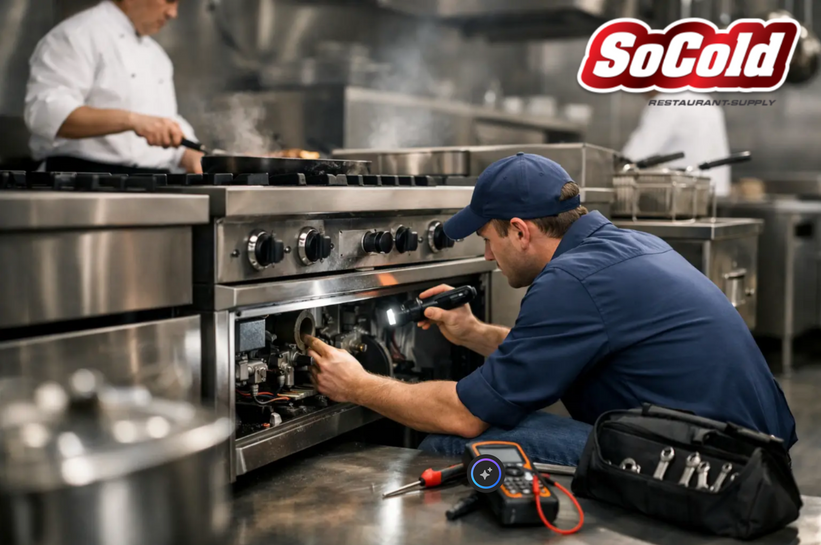
How to Prevent Commercial Kitchen Downtime
Posted by Steve MM on 5th Jun 2026