 US Dollar
 Canadian

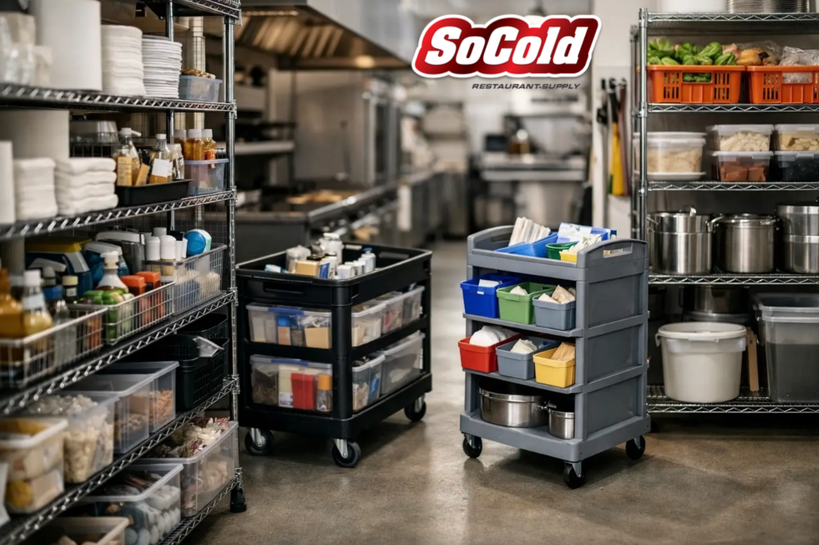
A missing case of gloves during a Friday rush is rarely a purchasing problem. More often, it is a back-of-house organization problem. Knowing how to organize back of house supplies means creating a system where staff can find, count, rotate, and reorder critical items without opening every box in the building.
For a commercial kitchen, storage has to support speed, sanitation, and cost control at the same time. The goal is not a picture-perfect stockroom. The goal is to prevent outages, reduce expired product, protect high-use items, and make the next shift as prepared as the last.
Start With a Full Supply Inventory
Before moving shelves or printing labels, identify what is actually being stored. Pull supplies from dry storage, chemical closets, dish areas, maintenance cages, offices, and any overflow space. Include disposables, smallwares, cleaning chemicals, paper goods, PPE, uniforms, plumbing repair parts, equipment parts, and seasonal items.
Record the item name, unit of measure, current quantity, storage location, supplier, typical usage, and reorder point. A simple spreadsheet can work for an independent restaurant. Multi-unit operators may need inventory software or a purchasing platform that ties usage to purchase history.
This first count often exposes duplicate buying. A kitchen may have three partial cases of takeout containers in separate areas while running short on lids. It can also reveal expensive items that are being treated like common supplies, such as specialty chemicals, OEM-style replacement parts, thermometers, or high-quality smallwares.
Build Storage Zones Around the Work Flow
The best back-of-house layout follows the path employees take during service and cleanup. Do not organize solely by supplier category or by the order in which products arrived. Staff should not have to cross the building for a roll of labels, a sanitizer test strip, or a backup pan needed during prep.
Create clear zones for the major supply groups:
* Food prep and service supplies: gloves, foil, film wrap, deli containers, labels, towels, pans, utensils, takeout packaging, and portion-control tools.
* Dishwashing and sanitation supplies: detergent, rinse aid, sanitizer, test strips, brushes, scrapers, dish racks, hand soap, and cleaning tools.
* Janitorial supplies: floor chemicals, mop heads, brooms, trash liners, restroom paper products, spill-response items, and caution signs.
* Maintenance and equipment parts: water filters, gaskets, valves, igniters, thermostats, belts, fasteners, plumbing fittings, and manufacturer-specific replacement parts.
* Administrative and employee supplies: printer paper, pens, timekeeping materials, uniforms, hair restraints, first-aid supplies, and training documents.
Keep high-velocity items close to the point of use. Backup gloves and towels belong near prep and dish areas, not on a top shelf in a remote storeroom. Put lower-use inventory and bulk reserve cases farther away. This protects valuable space near the line while keeping daily replenishment quick.
Separate Chemicals From Food and Food-Contact Items
Chemical segregation is non-negotiable. Store cleaning chemicals in a designated, labeled location away from food, packaging, clean utensils, and food-contact equipment. Keep safety data sheets accessible to employees and use secondary containment where leaks could damage inventory or create a hazard.
Chemical storage also needs practical controls. Group products by application, clearly separate concentrates from ready-to-use products, and retain original labels. Decanted chemicals must be labeled correctly. Avoid placing heavy chemical cases above shoulder height, where handling creates a higher spill risk.
Set Par Levels That Match Actual Demand
A par level is the amount of an item you need on hand to cover normal use between deliveries, plus a reasonable buffer. It is the foundation of supply continuity. Without pars, teams either overbuy to avoid running out or discover shortages during service.
Start with recent usage. If the kitchen uses two cases of medium gloves per week and receives deliveries twice weekly, a practical par might be one open case plus two sealed cases. The right number depends on lead time, storage capacity, delivery reliability, minimum order requirements, and how disruptive a stockout would be.
Not every item deserves the same buffer. Disposable cups may be easy to source locally, while a specific refrigeration gasket or ice machine water filter may require more lead time. Critical parts should have a higher service-level buffer, especially if their failure can take equipment out of operation.
Review pars after menu changes, seasonal volume shifts, promotions, catering events, or changes in vendor delivery schedules. A par that worked in January may be too low for patio season or holiday traffic.
Use FIFO and Make Dates Visible
First in, first out is as useful for back-of-house supplies as it is for food inventory. Put new cases behind older cases so the existing stock gets used first. This reduces obsolete packaging, expired chemicals, dried-out markers, damaged paper products, and forgotten specialty items.
Date each received case with the delivery date, especially for chemicals, water filters, batteries, labels, and products with a shelf life. For high-use disposables, a receiving-date label is usually enough. For products with expiration dates or lot tracking requirements, keep the manufacturer information visible as well.
Avoid stacking new deliveries in front of existing supplies because it is faster in the moment. That habit creates a hidden inventory layer that eventually turns into waste. If receiving space is tight, assign one employee or shift to put stock away correctly before the next delivery arrives.
Label Shelves, Bins, and Reorder Points
A good label answers three questions immediately: what belongs here, how much belongs here, and when should it be reordered? Use large, durable labels that staff can read from the aisle. Include the product name, size or specification, unit of measure, and par level.
For similar products, details matter. “Gloves” is not enough when the operation uses multiple sizes, materials, and colors. “Dish detergent” is not enough if the machine uses a specific product and concentration. Use familiar operational names, product codes, or internal SKUs where they reduce confusion.
Color coding can help when categories are visually similar. For example, use one color for janitorial products, another for dish area supplies, and another for maintenance parts. Do not rely on color alone, since new staff and color-blind employees still need clear text labels.
Keep Open Stock Separate From Reserve Stock
Open cases create count errors and clutter when they are mixed with reserve inventory. Assign a dedicated shelf, rack, or bin for open stock. Staff pull from this location for daily use, while sealed reserve cases remain organized behind or above it.
This approach makes counts faster. A manager can see whether the open bin is low without breaking down every case. It also helps prevent employees from opening a new case when an identical open case is already available.
Protect High-Value and High-Risk Items
Some supplies need controlled access, not just better shelving. High-cost replacement parts, specialty tools, batteries, liquor-related disposables, certain chemicals, and premium smallwares can disappear through accidental misuse or untracked borrowing.
Use a locked cabinet, parts cage, or manager-issued checkout process for these items. The control should be proportional to the risk. Locking every roll of foil slows down operations; locking a costly control board or keeping a sign-out log for equipment-specific parts can prevent unnecessary replacement orders.
Maintenance inventory deserves special attention. Organize parts by equipment type, manufacturer, and model where possible. A gasket that looks close may not fit the refrigeration unit on site. Keep model numbers and part descriptions with the bin label so a technician can verify compatibility before installing a part.
Make Replenishment a Scheduled Task
Organization fails when it depends on someone remembering to check supplies after a rush. Build replenishment into the operating routine. Line supplies may need a quick daily check, while bulk paper goods and maintenance parts might be reviewed weekly or monthly.
Assign ownership by area. The dish lead can check dish chemicals and racks, a closing manager can review disposables and janitorial supplies, and a facilities or maintenance lead can monitor filters, gaskets, and repair parts. One person should still own the final order review to prevent duplicate purchasing.
Use a simple count sheet or digital checklist that compares on-hand quantities to par levels. When an item falls below the reorder point, add it to the order immediately rather than relying on a verbal reminder. For recurring supplies, purchasing from a broad-line source such as SoCold Products can reduce the time spent chasing separate vendors for chemicals, disposables, smallwares, and replacement parts.
Audit the System and Adjust What Slows Staff Down
A storage system should improve with use. Walk the back of house during a busy shift and watch where employees hesitate, search, or substitute one item for another. Those moments show where labels are unclear, pars are wrong, or supplies are located too far from the work.
Perform a more detailed monthly audit. Check for expired or damaged stock, duplicate items, empty labeled locations, chemical storage issues, unapproved substitutions, and parts that no longer match equipment on site. If a shelf consistently becomes disorganized, the fix may be a smaller bin, a different location, or a more realistic par level.
The best supply room is not the one that stays untouched. It is the one that helps employees recover quickly when volume spikes, a delivery is delayed, or an equipment repair cannot wait. Keep the system simple enough to follow on a busy night, and it will keep paying for itself in fewer outages, less waste, and faster work.