 US Dollar
 Canadian

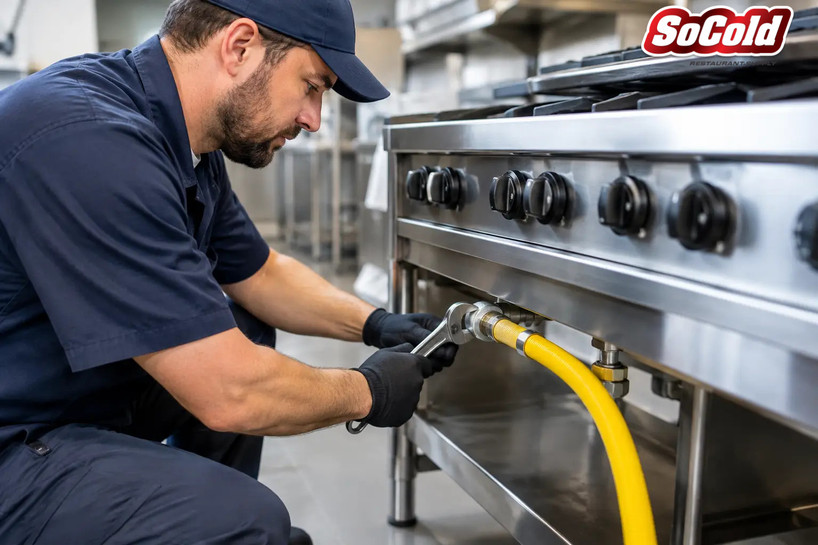
A gas hose behind a commercial range, fryer, or oven is easy to overlook until a unit must be pulled for cleaning, service, or an emergency repair. Gas hose replacement is not a routine purchasing decision to make from a photo alone. The connector, fittings, shutoff valve, quick-disconnect device, and restraint system all need to match the appliance, gas supply, local code requirements, and actual movement of the equipment.
For restaurant operators and maintenance teams, the objective is straightforward: keep gas-fired equipment available without creating a leak risk, delaying a service call, or installing a part that does not fit. A little verification before ordering prevents a lot of downtime after the technician arrives.
When Gas Hose Replacement Is Needed
Commercial gas connectors are built for demanding environments, but heat, grease, repeated movement, cleaning chemicals, and physical damage take their toll. Replacement is warranted when a hose shows cracking, corrosion, kinking, abrasion, crushed sections, damaged threads, or a compromised outer braid. A connector that has been stretched, twisted, or pulled tight should also be evaluated rather than put back into service.
Equipment movement is a common cause of failure. A range may be pulled forward daily for cleaning, or a fryer may be moved during hood service. If the connector is too short, too long, unsupported, or missing the correct restraining device, each movement can place stress on the hose and fittings. The problem may not be visible from the front line, especially when the connection sits behind heavy equipment.
Replacement may also be necessary after a remodel, a gas type conversion, an appliance relocation, or replacement of a shutoff valve or quick-disconnect fitting. Do not assume an existing hose can simply be reused because its ends appear to match. Its length, capacity, certification, and condition still matter.
Identify the Existing Gas Connection Before Ordering
The fastest way to order the wrong part is to rely only on the appliance model number. Start by documenting the current installation. Record the connector length, the connection size at both ends, the gas type, and whether the equipment uses a quick-disconnect system. Take clear measurements with the appliance in its normal operating position, not while it is pulled away from the wall.
Thread type requires special attention. National Pipe Thread connections and flare fittings are not interchangeable, even when their nominal sizes sound similar. Commercial gas equipment may also have elbows, adapters, swivel ends, or proprietary connection arrangements that affect the final fit. A technician should confirm these details if there is any uncertainty.
Check the appliance data plate for its BTU input and gas type. Natural gas and propane systems operate differently, and a connector or fitting approved for one application is not automatically suitable for another. The hose must be rated for the appliance load and the specific fuel being supplied. Undersizing a connector can restrict gas flow and contribute to poor burner performance, ignition issues, or inconsistent recovery.
Measure for Working Length, Not Just Reach
A connector needs enough length to allow the appliance to move as intended without tension or sharp bends. That does not mean choosing the longest hose available. Excess length can drag on the floor, kink behind the unit, contact hot surfaces, or become difficult to inspect.
For equipment on casters, account for the full distance needed to pull the appliance forward for cleaning or service. The restraint cable or chain should stop the equipment before the connector reaches its maximum extension. If the unit has been moved farther than the restraint allows in the past, inspect the entire gas connection for damage.
Selecting a Commercial Gas Hose and Components
A complete gas connection is more than a flexible hose. Depending on the installation, the assembly may include a manual shutoff valve, quick-disconnect device, full-port fitting, restraining device, swivel connector, and adapters. Each item should be selected as a compatible system rather than assembled from whatever fittings happen to be on the shelf.
For commercial kitchen equipment, use a connector listed for commercial gas applications and appropriate for the local authority having jurisdiction. Do not substitute water connectors, generic tubing, or non-rated flexible lines. The product listing, temperature limitations, connector diameter, and fuel compatibility need to fit the application.
A quick-disconnect fitting can reduce service time when equipment needs to be removed, but it must be properly matched and installed. These fittings are generally used with a shutoff valve and a restraining device on movable equipment. The restraint is not optional hardware. It protects the gas connector from being used as a stop when the appliance is pulled out.
Consider the operating environment as well. A high-heat cook line, a heavy fryer battery, and a small countertop appliance do not place the same demands on a gas connection. Verify clearance from heat sources, sharp edges, foot traffic, and cleaning equipment. If the installation is exposed to grease buildup or frequent washdown, build inspection access into the layout.
Gas Hose Replacement Must Be Installed Correctly
Gas work should be completed by a qualified, licensed professional in accordance with local codes, manufacturer instructions, and site requirements. Restaurant managers can speed up the process by having the correct parts, appliance information, and access ready before the service visit, but the final installation and leak testing should not be treated as a do-it-yourself task.
The installer should shut off the gas supply, remove the failed or outdated components, and inspect the valve, appliance inlet, fittings, and restraint anchors before installing the new assembly. Damaged threads, corrosion at the valve, or an improperly located shutoff can turn a simple replacement into a larger repair.
Thread sealant must be suitable for gas service and applied only where required. Flare connections seal at the mating surfaces, not on the threads, so applying tape or sealant in the wrong place can interfere with the connection. Over-tightening is another avoidable problem. It can damage fittings or distort connector ends.
After installation, the system needs a proper leak test using an approved method. Never use an open flame to check for leaks. The appliance should then be returned to service only after burner operation, ignition, gas pressure where applicable, and connector movement have been verified.
Common Purchasing Mistakes That Create Delays
Ordering by hose length alone is the most common mistake. A 36-inch connector may be physically long enough but still have the wrong diameter, end fittings, gas rating, or movement allowance. The lowest-cost option can become expensive if it requires a second service call or leaves the equipment down during a busy shift.
Another frequent issue is replacing the connector but ignoring the restraint. If a movable range has no restraint, or its cable is worn, incorrectly anchored, or too long, the new hose remains vulnerable. The same applies to shutoff valves and quick-disconnect fittings that are old, hard to operate, or incompatible with the replacement connector.
Do not overlook manufacturer requirements. Some equipment specifications call for particular connection methods, regulator arrangements, or clearances. These requirements affect safety, warranty considerations, and inspection outcomes. If the appliance was acquired used, confirm that the connection setup is still appropriate for its current location and gas supply.
Build Gas Connection Checks Into Preventive Maintenance
A quick visual check during scheduled equipment cleaning can catch many problems early. Look behind movable gas equipment for grease accumulation, contact with hot surfaces, sharp bends, loose restraints, and hoses that are rubbing against the floor or wall. Operators should know not to force equipment past its restraint or use the hose as a handle when pulling units forward.
Maintenance teams should keep a record of connector sizes, fitting types, and appliance locations for critical cook line equipment. This is particularly useful for multi-unit restaurants, schools, hotels, and commissaries where several similar appliances may have different connection details. Stocking common approved components can shorten emergency downtime, but specialized hoses and fittings should still be verified against the installation before purchase.
When a gas connector is due for replacement, treat it as a chance to correct the whole connection setup, not just swap a worn hose. Confirm the appliance data, measure the movement path, match the fittings, and have a qualified professional test the finished installation. That preparation keeps a small maintenance task from becoming a lost service period.