 US Dollar
 Canadian

A cooler door that will not seal all the way usually starts as a small problem. You notice condensation around the frame, the compressor runs longer, or product near the door line starts drifting out of range. Commercial refrigerator door gasket replacement is often the fix that stops those issues before they turn into spoiled inventory, higher utility costs, or a no-cool service call during peak hours.
In a commercial kitchen, a worn gasket does more than let cold air escape. It puts extra load on the refrigeration system, creates temperature inconsistency, and makes sanitation harder when the seal starts cracking, tearing, or pulling away from the channel. For operators and service teams, that makes gasket condition a maintenance item, not a cosmetic one.
When a door gasket needs to be replaced
Most failed gaskets show warning signs before the door stops sealing completely. The easiest ones to spot are visible splits at the corners, hardened vinyl, magnet sections that no longer hold, and warped edges that leave gaps when the door is closed. You may also see frost buildup, sweating around the door opening, or shelves near the front warming up faster than the rest of the cabinet.
Sometimes the gasket is not the only issue. Hinges can sag, doors can get misaligned, and debris in the channel can prevent full contact. That is why a quick inspection matters before ordering parts. If the door is square and the frame is clean but the seal still does not sit flat, the gasket is usually the right place to start.
A simple paper test can help. Close the door on a strip of paper at several points around the perimeter. If the paper slides out easily in one area but holds firmly in others, the gasket may be compressed or damaged in that section. If it slips everywhere, check alignment as well as gasket wear.
Why commercial refrigerator door gasket replacement pays off
The cost of a replacement gasket is usually modest compared with the cost of lost product or constant compressor run time. In a high-use environment, even a small air leak adds up fast. Walk-ins, reach-ins, prep tables, undercounter units, and merchandisers all depend on a consistent seal to hold safe temperatures.
There is also a labor side to the problem. When a door does not close cleanly, staff tend to push harder, slam it, or revisit it multiple times to make sure it catches. That creates wear on hinges, handles, and the door itself. Replacing the gasket at the right time can prevent a minor parts issue from turning into a larger repair.
For chains, schools, hospitals, and multi-unit operations, standardizing replacement on worn gaskets is also a purchasing decision. It keeps equipment in service longer and reduces emergency maintenance calls that cost more than planned parts orders.
Getting the right gasket the first time
This is where many replacements go off track. Commercial refrigeration gaskets are not interchangeable just because the door size looks similar. You need the correct fit for the specific equipment brand and model, and in many cases the door position matters too.
Before ordering, confirm the manufacturer, model number, and if possible the existing gasket style. Measure carefully, but do not rely on dimensions alone. The profile, magnetic strip placement, corner construction, and mounting method all have to match. A gasket that is close but not exact may install poorly, leak air, or fail early.
The mounting style matters more than some buyers expect. Common commercial gasket styles include snap-in, push-in, screw-in, and dart-style configurations. If the replacement does not match the retainer channel, installation becomes slow and the seal may never seat correctly.
For service techs and maintenance buyers, this is one of those categories where clear equipment identification saves time. A broad-line supplier with organized replacement parts coverage is useful here because you can often source the gasket and any related maintenance items in the same order instead of chasing separate vendors.
How to handle commercial refrigerator door gasket replacement
The exact process depends on the unit, but most replacements follow the same basic path. Start by unloading product if needed and cleaning the door area so grease, crumbs, and residue do not interfere with the new seal. Inspect the door liner and retaining track before removing anything. If the channel is cracked or the liner is damaged, the gasket alone may not solve the problem.
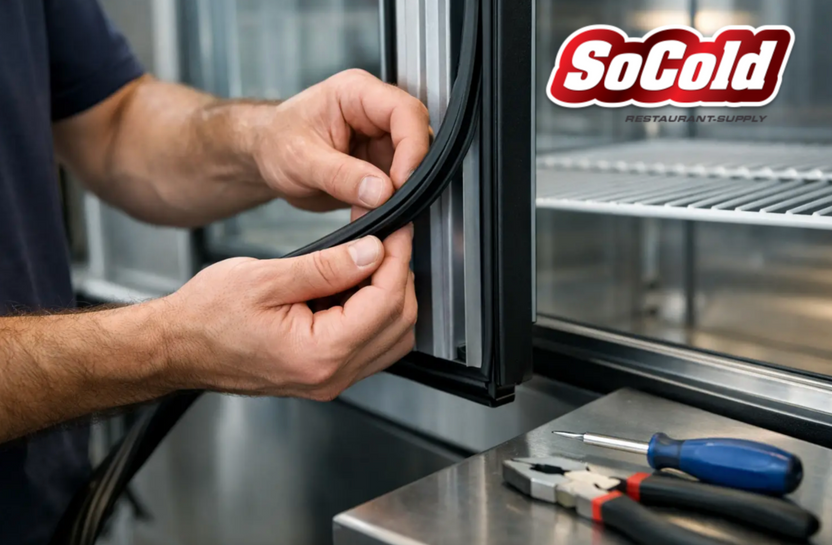
Remove the old gasket carefully. On some doors it pulls out by hand. On others you may need to loosen screws behind the gasket lip without removing them fully. Avoid forcing corners if the liner material is brittle.
Once the old gasket is off, clean the channel thoroughly. Dirt left in the retainer can keep the new gasket from seating fully, especially at the corners. This is also the right time to inspect hinge wear and door alignment. If the door is sagging, install and adjustment should happen together.
Many new gaskets arrive with folds from packaging. Warming the gasket before installation can help it relax and sit flat. Depending on the material and manufacturer guidance, techs often use warm water or allow the gasket to rest at room temperature before fitting it. The goal is to reduce memory in the folds, not overheat the material.
Install the gasket evenly, starting at one corner and working around the perimeter. Do not stretch it to make it fit. A stretched gasket may look fine at first and then shrink back, creating gaps. Once installed, close the door and check for full contact all the way around. Minor waviness may settle out after a short period, but obvious leaks or twisted corners need to be corrected immediately.
Common problems after replacement
If the new gasket still does not seal, the part may be correct but the door may be out of alignment. This is especially common on older reach-ins and heavily used prep units. A fresh gasket can actually make hinge sag more obvious because the material has not yet compressed.
Another issue is ordering by measurements only. Two gaskets can have similar outside dimensions and completely different profiles. If the fit is loose in the track or the magnetic contact is weak despite proper installation, verify the model match again.
Temperature problems can also persist when the gasket was only one part of the issue. If evaporator icing, fan problems, or control faults are present, replacing the seal will help but will not solve the underlying refrigeration problem. That is why the best maintenance decisions come from looking at the whole door and cabinet condition, not just the visible tear in the gasket.
Replacement timing and preventive maintenance
There is no single schedule for gasket replacement because wear depends on traffic, cleaning practices, ambient heat, and the type of unit. A line cooler opened constantly during service will usually need attention sooner than a lower-use backroom refrigerator. The right approach is routine inspection rather than waiting for obvious failure.
Monthly checks are practical for high-use equipment. Look for loose corners, brittleness, mold buildup, crushed sections, and any point where the door does not pull itself shut cleanly. Train staff to report doors that pop open, require extra force, or show persistent condensation. Those are low-effort observations that can prevent expensive product loss.
Cleaning also extends gasket life, but only if the method is reasonable. Harsh chemicals and aggressive scrubbing can dry out or damage the material. Use foodservice-safe cleaning practices and make sure residue does not build up in folds and corners. A clean gasket seals better and makes inspection easier.
Buying for uptime, not just unit price
For operators, commercial refrigerator door gasket replacement is one of those purchases where speed and accuracy matter more than chasing the lowest number on a screen. The wrong gasket costs labor, delays repair, and leaves equipment underperforming. The right one gets the unit back to holding temperature with minimal disruption.
That is especially true for maintenance teams managing multiple brands across several locations. Having access to replacement parts organized around actual equipment models cuts down on guesswork and repeat ordering. For many buyers, that operational convenience is as valuable as the part itself.
If you are replacing one failed gasket, it is also worth checking comparable units in the same age range. Similar wear patterns tend to show up across the kitchen at about the same time. Handling those replacements in a planned order is usually easier than reacting to leaks one door at a time.
A refrigerator door gasket is a simple part, but in a commercial setting it has a direct effect on food safety, energy use, and equipment uptime. Treat it like a working component, not a trim piece, and you can solve a lot of avoidable refrigeration problems before they reach the service ticket stage.
Commercial Refrigerator Door Gasket Replacement
22nd May 2026