 US Dollar
 Canadian

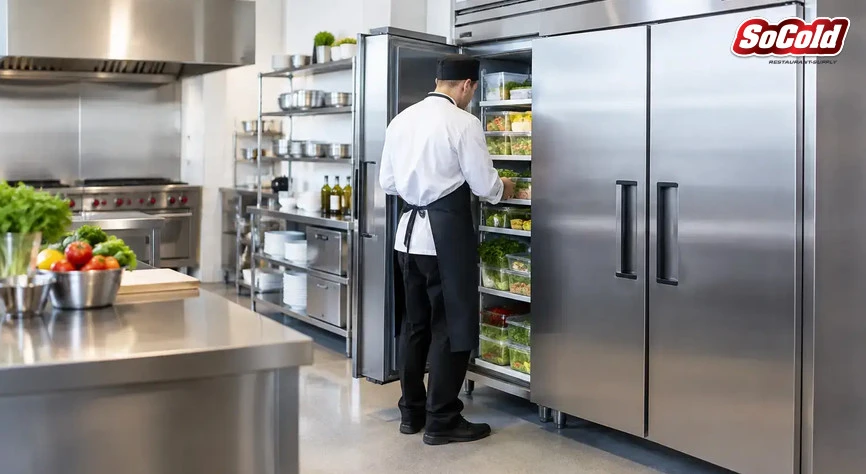
A walk-in full of product is not much help if the line cannot reach what it needs during a rush. Commercial refrigeration should protect food, support prep flow, and give staff fast access without creating a maintenance problem your team cannot afford to ignore.
The right unit is rarely just the one with the most cubic feet or the lowest purchase price. A deli, bar, school cafeteria, quick-service restaurant, and full-service kitchen can all need refrigeration, but their loads, door cycles, available space, and recovery needs are different. Start with the work the equipment must do, then match the cabinet, system, and components to that job.
Commercial Refrigeration Starts With the Load
First, separate storage from production. A reach-in refrigerator holding backup cases of produce has a different job from a refrigerated prep table opened every few seconds through lunch service. Likewise, a freezer used for long-term inventory does not need the same access pattern as a lowboy freezer supporting a fry station.
Think about what enters the unit, how cold it is when it arrives, how long it stays, and how often the doors open. Refrigeration is designed mainly to hold product at safe temperatures, not to rapidly cool large quantities of hot food. Loading a cabinet with hot pans, warm deliveries, or uncovered product can strain the system and put food at risk. Blast chillers and properly managed cooling procedures handle rapid pull-down better where that is the operational need.
Capacity should be based on usable space, not just exterior dimensions. Shelf spacing, pan compatibility, evaporator location, door configuration, and interior layout all affect how much product staff can actually store and retrieve. A cabinet that looks large on a spec sheet can become inefficient if sheet pans, hotel pans, dough trays, or beverage cases do not fit the way your operation uses them.
Match the Equipment to the Station
Most kitchens rely on a combination of equipment rather than one oversized unit. Reach-ins provide flexible back-up storage. Undercounter refrigerators and freezers preserve work space near the line. Prep tables keep ingredients organized at the point of assembly. Bar refrigeration supports high-volume beverage service, while merchandisers prioritize product visibility and customer access.
Walk-ins make sense when inventory volume, delivery size, or menu complexity exceeds what cabinets can reasonably handle. They require more planning, including panel layout, floor conditions, door traffic, refrigeration system placement, and clearance for service. For operations with limited square footage, a well-organized bank of reach-ins and undercounter units may be the more practical option.
When choosing between solid and glass doors, consider the trade-off. Glass doors help staff see inventory before opening the cabinet and can reduce unnecessary door openings. They are useful for beverage, grab-and-go, and retail-facing applications. Solid doors typically offer a straightforward choice for back-of-house storage, where visibility matters less than durability and routine access.
Size the Unit for Space, Airflow, and Service
A refrigeration purchase can fail before installation if the team only measures the spot where the cabinet will sit. Measure doorways, hallways, elevators, turns, and the final location. Verify that the unit can get into the building with doors, casters, or packaging considered. A large reach-in that cannot clear a back entrance is an expensive delivery-day surprise.
Leave room around the equipment according to manufacturer requirements. Condensing units need airflow to reject heat. Blocking vents with walls, boxes, or adjacent equipment makes the compressor work harder, raises energy use, and shortens component life. Kitchens already run hot, so placing refrigeration next to fryers, ovens, dish machines, or direct sunlight creates an avoidable load.
Electrical requirements deserve the same attention. Confirm voltage, phase, plug type, dedicated circuit needs, and outlet location before ordering. A unit may be physically right for the space but still require electrical work. Walk-ins and remote systems may also involve coordination with refrigeration contractors, electricians, and building management.
Compressor location matters. Top-mounted systems are often a practical choice in hot, greasy kitchens because they pull in warmer but generally cleaner air above the cooking zone. Bottom-mounted systems can place the bottom shelf closer to staff and may perform well in cooler environments, but they can collect more dust, flour, and debris near the floor. There is no universal winner. Choose based on ambient conditions, cleaning discipline, and access for service.
Buy for the Real Shift, Not the Best-Case Shift
Door openings are one of the biggest variables in refrigeration performance. A unit in a quiet prep room sees a very different workload from a sandwich station, busy bar, or high-volume pickup area. If staff regularly leave doors open while portioning, restocking, or searching for product, a lightly built cabinet may not recover fast enough.
Look for features that reduce handling time: adjustable shelving, full-size pan rails, drawers where portioned ingredients are used, self-closing doors, clear temperature displays, and casters for cleaning access. These are not cosmetic details. They affect how consistently staff use the equipment and how quickly the area can be cleaned at the end of a shift.
Energy use also depends on application. High-efficiency equipment can reduce utility costs over time, but the best value is not always the unit with the highest upfront specification. Consider expected door traffic, local utility costs, available maintenance support, and the cost of a breakdown. A less expensive cabinet that is difficult to repair or poorly suited to the station can cost more in product loss and downtime.
For replacement purchases, compare the existing unit's actual failure point. If the old refrigerator repeatedly had clogged condensers because it sat near a fryer, replacing it with a similar model without changing placement or cleaning routines repeats the same problem. If the issue was insufficient capacity, adding another small cabinet may be smarter than forcing a single reach-in to do too much.
Protect Temperature Control With Daily Habits
Commercial refrigeration needs routine attention, not just emergency service calls. Staff should check and record temperatures according to your food safety program, listen for unusual noise, inspect door gaskets, and keep products organized for airflow. Overpacking cabinets blocks circulation and creates warm spots, especially around the evaporator area.
Keep food covered, labeled, and off the floor. Do not store product directly against interior walls or stack pans so tightly that cold air cannot move. Let hot food cool using approved methods before it goes into standard holding equipment. These practices support food quality while reducing unnecessary stress on the refrigeration system.
Condenser cleaning is one of the most valuable maintenance tasks in a working kitchen. Grease, dust, cardboard fibers, and flour buildup restrict airflow across the coil. The result is higher head pressure, longer run times, poor temperature recovery, and possible compressor damage. Cleaning frequency depends on the environment. A bakery or fryer-heavy kitchen may need more frequent attention than a low-grease operation.
Do not overlook door gaskets. Torn, hardened, or loose gaskets let warm, moist air into the cabinet, causing excess run time, frost, and temperature instability. They are a relatively small replacement item compared with the cost of product loss or a major refrigeration repair. Hinges, closers, fan motors, sensors, controllers, and drain components should also be checked when performance changes.
Plan for Parts Before the Emergency
When refrigeration stops holding temperature, the question is not only what failed. It is whether the correct part can be identified and obtained quickly. Record model and serial numbers for every refrigerated unit, including ice machines, walk-ins, prep tables, and bar equipment. Keep that information where managers and maintenance teams can access it after hours.
For multi-unit operations, maintaining a basic equipment file makes purchasing faster. Include installation date, warranty information, filter or cleaning schedules, common replacement parts, and service history. This helps identify repeat failures and supports more informed repair-versus-replace decisions.
A failed fan motor, worn gasket, damaged door closer, or control component may justify repair if the cabinet is otherwise sound and the repair restores reliable operation. Compressor failure, repeated refrigerant leaks, extensive cabinet damage, or obsolete controls can shift the calculation toward replacement. Age alone does not decide it. Condition, repair cost, energy use, and the role that unit plays in production all matter.
The best commercial refrigeration setup is the one your crew can load correctly, access quickly, clean consistently, and keep running with available service and parts. Build around the flow of the kitchen, leave room for maintenance, and treat temperature control as an operating system rather than a box on the floor.