 US Dollar
 Canadian

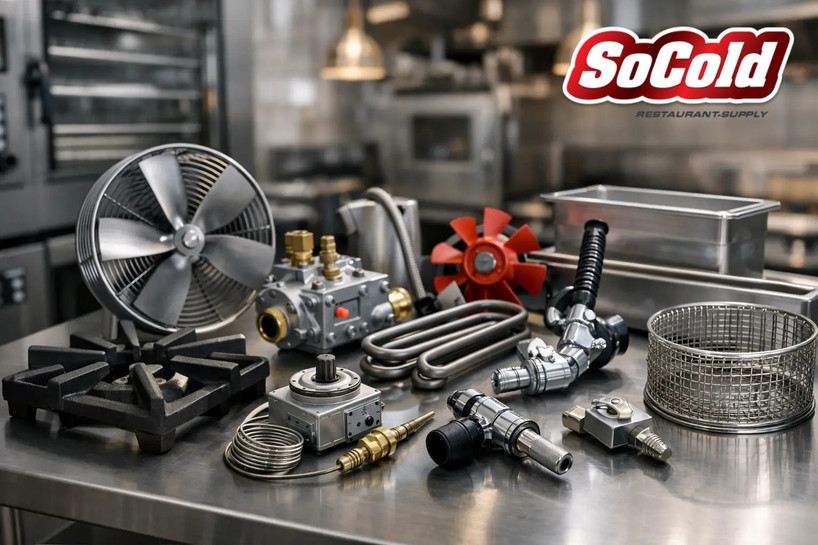
A fryer is down at 10:30 a.m., the lunch rush starts in an hour, and the wrong part on the shelf is just as useless as no part at all. That is why a commercial kitchen parts buying guide matters. For most operators, the real goal is not simply finding a replacement part. It is getting equipment back online fast, without ordering twice, overpaying, or creating another failure point a week later.
In commercial foodservice, parts purchasing sits right at the intersection of uptime, labor cost, and food safety. A failed igniter, torn door gasket, bad thermostat, or worn valve can stop production, increase utility use, or push a unit out of compliance. Buying correctly the first time saves more than the part cost. It protects service windows, staffing efficiency, and repair budgets.
How to use this commercial kitchen parts buying guide
The fastest way to buy the right part is to stop shopping by appearance alone. Many components look similar across brands and models, but small differences in voltage, dimensions, mounting style, thread type, or temperature rating can turn a quick repair into a repeat call.
Start with the equipment data plate. In most cases, the manufacturer name, model number, and serial number are the minimum information needed to narrow a part correctly. If the plate is damaged or unreadable, use any available service record, original invoice, or internal asset tag to identify the unit. Guessing based on photos is where most ordering errors begin.
Once the equipment is identified, confirm the exact function of the failed part. A hot surface igniter is not interchangeable with every igniter. A refrigeration fan motor may match in size but fail on RPM, rotation, shaft length, or voltage. Even a simple gasket can vary by profile, magnet type, and corner construction. The more specific the diagnosis, the better the order.
OEM, OEM-style, and universal parts
This is usually where cost and speed start competing with each other. OEM parts are built to the equipment maker's original specification. They are often the safest choice when fit, compliance, warranty conditions, or performance tolerances matter. For thermostats, control boards, door hardware, and branded refrigeration components, OEM can reduce the risk of mismatch.
OEM-style parts can make sense when the specification is clear and the quality is proven. Many buyers use them successfully for routine wear items and common replacements, especially when managing multiple locations or tighter maintenance budgets. The trade-off is that compatibility still has to be checked carefully. Close enough is not good enough on a busy line.
Universal parts have their place, but only when the application truly supports them. They can be practical for certain knobs, casters, pilot assemblies, and common electrical items. They are a poor shortcut when the original part controls heat, timing, gas flow, or refrigeration performance. If a universal part creates extra labor, modified installation, or unreliable operation, any upfront savings disappear fast.
The parts categories that deserve extra attention
Not every part carries the same operational risk. Some are inexpensive but critical. Others are costly yet predictable. Buyers should treat the high-impact categories with more discipline.
Heating components are one example. Ignition modules, gas valves, thermocouples, thermostats, contactors, and heating elements all need close verification. A mismatch here can affect safety, cooking consistency, and code compliance. If a part influences flame, heat output, or shutoff behavior, confirm every electrical and mechanical detail before ordering.
Refrigeration parts need the same level of care. Fan motors, relays, defrost timers, probes, controllers, hinges, and gaskets all affect holding temperature and energy use. A cheap gasket that does not seal correctly can quietly raise utility cost and strain the compressor. A controller that is almost compatible can create erratic cycles and product loss.
Dishmachine parts also deserve attention because downtime here creates immediate sanitation pressure. Wash arms, rinse components, pumps, curtains, heaters, switches, and chemical feed parts should be matched precisely. If the machine is essential to service, it often makes sense to keep a few failure-prone parts in stock.
Ice machine parts can be just as sensitive. Water valves, pumps, sensors, bin switches, and control boards may look straightforward, but compatibility and water quality conditions matter. The wrong part may install fine and still create poor ice production or repeated faults.
What to check before you place the order
A disciplined parts buyer verifies five things every time: equipment model, serial range, part function, technical specification, and return eligibility. That sounds basic, but skipping one of those checks is how a same-day problem becomes a week-long one.
Serial range is especially important because manufacturers revise parts during production runs. A board or valve used on early units may not match later units with the same model number. That is one reason technicians ask for both model and serial instead of one or the other.
Technical specifications should be reviewed against the failed part whenever possible. Match voltage, wattage, dimensions, connection style, thread size, rotation, temperature range, and mounting points. If the old part is still on hand, compare labels and measurements before checkout. If it has already been discarded, rely on the equipment documentation and parts breakdown, not memory.
Return policy also matters more than many buyers think. Certain electrical parts, gas components, and installed items may be non-returnable. If your team is ordering under time pressure, make sure the diagnosis is solid before purchasing a part that cannot come back.
When to stock parts and when to buy as needed
Not every kitchen needs a deep parts room, but every operation should know which failures hurt most. The right stocking strategy depends on equipment mix, service volume, and distance from dependable supply.
For single-unit independents, it usually makes sense to stock low-cost, high-failure items for critical equipment: gaskets, pilot components, knobs, common switches, door hardware, and water filters. For chains, commissaries, schools, and healthcare kitchens, the smarter move is often to standardize a broader list around shared equipment platforms. If ten stores run the same fryer or reach-in, keeping a small quantity of known failure parts can cut downtime dramatically.
Buy-as-needed works for low-risk items, slow movers, and expensive assemblies that rarely fail. There is no reason to tie up cash in every possible board, compressor, or specialty valve unless the operation has a clear history of use. The best parts inventory is not the biggest one. It is the one built around actual failure patterns.
Common buying mistakes that cost more than the part
The most expensive mistake is ordering by visual match. Second is assuming all replacements are interchangeable within the same brand. Third is ignoring the root cause of failure.
If a fan motor burns out because of voltage issues, poor airflow, or a failing control, replacing the motor alone may only buy a short pause before the next service call. If a door gasket tears repeatedly, check hinge alignment and door closure. If an igniter keeps failing, inspect gas flow and control sequencing. Good parts buying is tied to good diagnosis.
Another common problem is prioritizing lowest unit price over total repair cost. A cheaper part that delays shipment, fails early, or sends a tech back on-site is rarely the better buy. In commercial kitchens, labor and downtime usually outweigh small price differences.
Choosing a supplier for commercial kitchen parts
This part is straightforward. Buyers need depth of inventory, clear product organization, accurate fitment information, and fast fulfillment. Wholesale pricing matters, but only after the supplier proves they can help you find the correct part without wasting hours.
A strong supplier should support both planned purchasing and urgent repair needs. That means broad category coverage, brand-specific organization, and practical access to parts for cooking equipment, refrigeration, dishwashing, ice machines, and everyday operating essentials. For many operations, consolidating those purchases through one source reduces friction and saves time across the whole maintenance cycle.
If you are managing multiple sites or high-volume kitchens, consistency matters even more. A supplier that helps standardize ordering habits across teams can reduce duplicate purchases, incorrect orders, and emergency scrambling.
Buy for uptime, not just for price
The best commercial kitchen parts buying guide is really a reminder to buy with the repair outcome in mind. The right part is the one that fits correctly, restores performance, arrives fast enough to matter, and does not create a second problem after installation.
When your team builds orders around equipment identification, technical verification, and operational priority, parts purchasing becomes less reactive and more controlled. That is how you protect uptime, keep labor productive, and avoid paying twice for the same repair.