 US Dollar
 Canadian

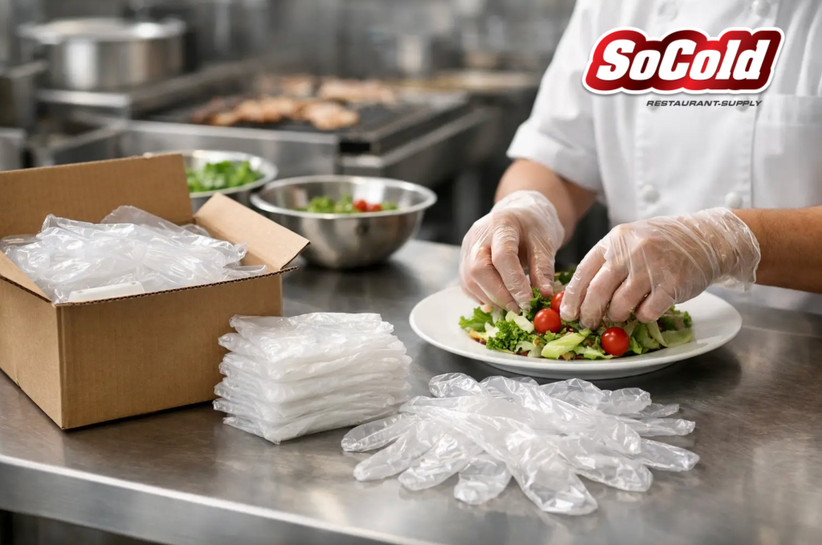
A case of gloves usually gets attention only when it runs out mid-shift. Then prep slows down, line cooks start stretching the wrong size, and managers are forced into a same-day purchase at a higher cost. Buying commercial kitchen disposable gloves bulk is less about box price and more about keeping food handling, sanitation, and labor moving without interruption.
For most kitchens, gloves are a repeat-use consumable on the same level as deli containers, foil, sanitizer, and trash liners. That means the right purchase decision should balance unit cost, task fit, storage space, and consistency across shifts. A cheaper glove that tears during portioning or feels too tight for half the crew is not actually cheaper once waste and slowdowns show up.
How to buy commercial kitchen disposable gloves bulk
The first question is not price. It is where and how the gloves will be used. A prep station handling raw proteins has different needs than a bakery line, dish area, or front counter assembling grab-and-go orders. Material matters because glove performance changes fast once grease, moisture, heat, or frequent glove changes enter the picture.
Nitrile is the default choice for many commercial kitchens because it offers strong puncture resistance, good flexibility, and broad chemical compatibility. It also avoids latex allergy concerns. If your staff move between food prep, cleaning support, and high-volume assembly, nitrile usually gives the best all-around performance, even when the per-glove cost is higher.
Vinyl often wins on upfront price and works for lighter-duty food handling, especially low-risk, short-duration tasks with frequent changes. The trade-off is durability. In busy prep environments, vinyl can split more easily and may not hold up as well when employees are portioning proteins, working with sharper edges, or moving quickly through repetitive tasks.
Latex still has users who prefer its fit and feel, but allergy concerns make it a more limited choice in many operations. For multi-employee kitchens, institutional settings, and customer-facing foodservice, many buyers would rather standardize on nitrile and avoid the issue.
Poly gloves have a place too, mainly for very fast, low-contact tasks such as ready-to-eat item handling or service applications where gloves are changed constantly. They are inexpensive and useful in the right station, but they are not a substitute for a more durable glove in prep-heavy production.
Material, thickness, and fit affect real cost
When buyers look at commercial kitchen disposable gloves bulk, they often compare case pricing before they compare failure rate. That can lead to the wrong decision. A glove that costs less per thousand but tears 10 percent more often can easily erase the savings.
Thickness matters, but thicker is not always better. A heavier glove may resist punctures, but it can also reduce tactile feel, which slows fine prep work like garnishing, slicing soft product, or handling small ingredients. For general kitchen use, the right gauge depends on the task mix. Light-duty service stations may be fine with a thinner glove, while central prep, commissary production, or raw meat handling usually benefits from something more substantial.
Fit is just as important. Gloves that are too loose reduce control and can snag. Gloves that are too tight fatigue hands and split at the cuff or fingertips. In high-turnover environments, managers sometimes try to simplify by ordering one size for everyone. That usually creates waste. A better approach is to stock the core sizes your team actually uses and monitor movement by case over time.
Color can also be operational, not cosmetic. Blue gloves are common in foodservice because they are easier to spot if torn or dropped. Black nitrile is popular in open kitchens, barbecue, and high-grease applications where appearance matters and stains show less. Clear poly and clear vinyl can make sense in service areas where cost control is the main concern. The right color choice depends on visibility, brand standards, and the type of work being done.
Case counts, usage rates, and storage planning
Bulk buying works best when the order matches your real consumption. If a kitchen uses 12 boxes a week and orders a six-month supply to chase a lower price, the savings may get eaten up by crowded storage, damaged cartons, or product aging in poor conditions. Gloves should be kept clean, dry, and away from heat and sunlight. A packed dry storage room next to hot equipment is not ideal for long-term holding.
Start with average weekly usage by station. Count prep, line, bakery, dish support, and any front-of-house food handling separately if they use different glove types. Then build in a cushion for seasonal volume, catering spikes, menu changes, and staff compliance improvements. Many kitchens underestimate glove use because they count normal weeks but ignore high-volume weekends and holiday periods.
There is also a practical difference between buying by box and buying by case. Box purchases may look flexible, but they usually come with a higher per-unit cost and more frequent reordering. Case purchasing reduces administrative friction, improves pricing, and lowers the risk of emergency substitutions. That matters more when multiple locations are trying to standardize purchasing.
For multi-unit operators, it often makes sense to narrow glove SKUs rather than over-customize by location. Standardizing core materials and sizes simplifies ordering, receiving, and training. The exception is when one concept has a clearly different use case, such as a bakery versus a protein-heavy fast-casual line.
Compliance and task matching in the kitchen
Disposable gloves are part of a food safety process, not a substitute for one. Managers still need staff changing gloves at the right times, washing hands appropriately, and using the correct glove for the task. The best glove program is easy to follow during a rush. If the product is uncomfortable, hard to dispense, or constantly out of stock, compliance slips.
That is why task matching matters. Ready-to-eat assembly, raw protein prep, allergen control, and light janitorial crossover all place different demands on a glove. In some kitchens, one nitrile glove can cover most applications. In others, using two or three glove types is more cost-effective because each station gets what it needs without overspending on premium product everywhere.
Powder-free is the standard choice for most foodservice environments. It reduces contamination concerns and supports cleaner handling. Textured fingertips can help in wet or greasy settings, especially in prep rooms where grip affects speed and safety.
Cuff design is worth checking too. Beaded cuffs generally help with easier donning and reduced tearing when staff are changing gloves quickly. That sounds minor until you multiply it by hundreds of glove changes a day.
When the lowest price is the wrong buy
Price pressure is real, especially for independents and chains watching every consumables line. But the lowest quote is not automatically the best purchasing decision. Glove quality can vary from one supplier or line to another, even when the specifications look similar on paper.
A better buying standard is total operational value. Look at consistency from case to case, ease of dispensing, breakage rate, and whether the gloves hold up to your actual menu and workflow. If the product changes without notice, or availability is inconsistent, that can create just as much trouble as overpaying.
This is where broad-line sourcing helps. Buyers already ordering chemicals, smallwares, janitorial supplies, replacement parts, or kitchen essentials can reduce purchasing time by adding glove replenishment to the same order flow. For operations trying to prevent stockouts while keeping receiving simple, that matters. SoCold Products fits that kind of purchasing model because the need is rarely just gloves. It is gloves plus the rest of the items the kitchen cannot afford to run out of.
What smart buyers check before placing a bulk order
Before you commit to a bulk glove purchase, verify a few basics. Make sure the material matches the station, the size mix reflects your actual staff, and the case quantity fits your storage and reorder cycle. Confirm whether the glove is powder-free, food-safe for your application, and durable enough for the tasks that create the most waste.
It also helps to review who is using gloves incorrectly. Sometimes rising glove spend is not caused by price at all. It may be coming from poor size distribution, overuse in low-risk tasks, or repeated tearing because the wrong material was chosen in the first place. A quick review of station-level use can clean up purchasing fast.
Bulk glove buying is not complicated, but it does reward attention to detail. The right case purchase supports food safety, protects labor speed, and cuts expensive last-minute orders. When gloves fit the job and stay in stock, nobody talks about them - which is exactly how a kitchen consumable should perform.
The best glove order is the one your staff barely notices because it keeps every station moving.