 US Dollar
 Canadian

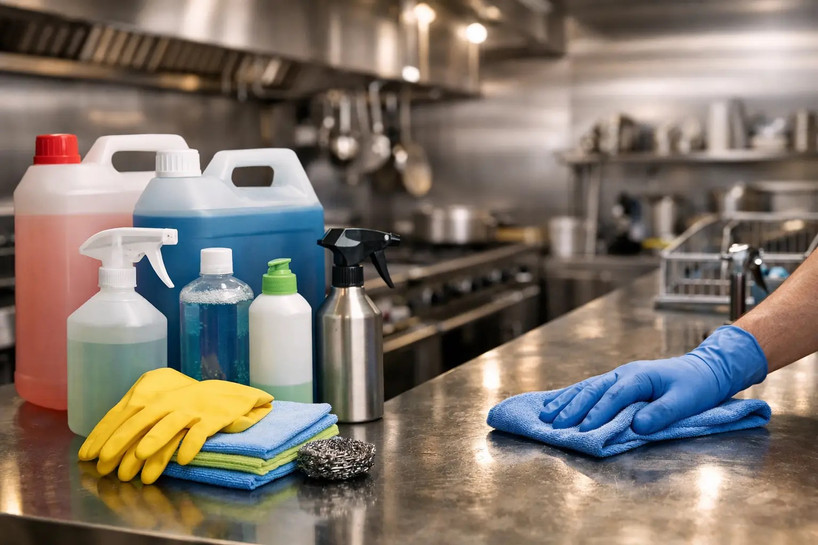
A line cook sprays the wrong product on a hot griddle, someone grabs a bleach-based cleaner for stainless, and now the shift has a surface problem, a safety problem, and wasted labor. That is why commercial kitchen cleaning chemicals are not just another supply line. In a working kitchen, the right chemical choice affects food safety, equipment life, labor time, and whether the back of house stays inspection-ready.
Most operators do not need more chemical options. They need the right categories in stock, clear use cases, and products that match the way their kitchen actually runs. A small cafe, a high-volume chain unit, and an institutional kitchen may all clean daily, but they do not deal with the same soil load, equipment mix, or labor constraints.
How to choose commercial kitchen cleaning chemicals
Start with the mess, not the label. In commercial foodservice, most cleaning jobs come down to grease, carbon buildup, mineral scale, food soil, protein residue, or sanitizing after cleaning. If you match the chemical to the soil type first, purchasing gets easier and results get more consistent.
Degreasers handle heavy grease on floors, hoods, walls, and equipment exteriors. Delimers and descalers are for mineral deposits in dishmachines, steam equipment, and ice machines. Oven and grill cleaners are built for baked-on carbon and cooked grease. General surface cleaners remove lighter daily soil. Sanitizers and disinfectants serve a different purpose - they reduce or kill microorganisms after the surface has been properly cleaned.
That distinction matters. A sanitizer is not a shortcut for a dirty prep surface, and a degreaser is not automatically safe for every material in the kitchen. The wrong product can leave residue, damage finishes, or create a hazardous mix if staff combine chemicals.
The core chemical categories most kitchens need
A practical chemical program usually covers daily cleaning, periodic deep cleaning, warewashing support, floor care, and food-contact sanitizing. The exact mix depends on menu, equipment, and service volume.
Degreasers for back-of-house buildup
If your kitchen produces grease, this is a high-use category. Degreasers are commonly used on cook lines, fryer exteriors, splash zones, and floors around production equipment. Some are heavy-duty and alkaline for thick grease loads. Others are milder for routine wipe-downs.
Stronger is not always better. Heavy-duty degreasers can save labor on neglected buildup, but they may require more rinsing and tighter handling procedures. For daily use, a product that works fast without excessive dwell time often gives better labor value than the most aggressive option on the shelf.
Oven, grill, and fryer-area cleaners
These products are designed for carbonized soil and cooked-on residue that ordinary degreasers struggle to remove. They are useful, but they also need more care. Temperature requirements, ventilation, PPE, and rinse procedures matter here.
For kitchens with flat tops, charbroilers, conveyor ovens, or heavy roasting production, this category is not optional. It is part of equipment upkeep. Leaving carbon buildup in place usually means more scraping, longer recovery time, and eventually more wear on the equipment itself.
Delimers and descalers
Hard water is expensive if you ignore it. Deliming chemicals are commonly used in dishmachines, steamers, coffee equipment, and ice machines where mineral scale can affect performance. Scale reduces efficiency, interferes with heating elements, and can shorten service life.
This is one of the clearest examples of cleaning chemistry protecting uptime. A kitchen that stays on schedule with deliming usually sees fewer avoidable equipment issues than one that waits until performance drops.
Sanitizers and disinfectants
In foodservice, sanitizing is tied directly to compliance and food safety. But not every product fits every surface or every local requirement. Some products are designed for food-contact surfaces after cleaning. Others are intended for restrooms, handles, and non-food-contact areas.
Contact time is where many programs break down. If the product requires a full minute or more to work and staff are spraying and wiping immediately, you are not getting the intended result. The best sanitizer on paper still fails if the process does not match the pace of the kitchen.
Floor cleaners and drain maintenance products
Floor chemistry matters more than many buyers think. A greasy floor is a slip risk, but an overly harsh cleaner can damage finishes or leave residue that attracts more soil. Kitchens with quarry tile, sealed floors, or specialized surfaces should buy accordingly.
Drain products also need a careful approach. Not every drain issue should be handled chemically, and not every drain cleaner is appropriate for foodservice environments. In many kitchens, regular maintenance products make more sense than emergency-use chemicals.
Commercial kitchen cleaning chemicals and surface compatibility
A good chemical program protects surfaces instead of slowly destroying them. Stainless steel, aluminum, rubber gaskets, plastics, glass, stone, and coated surfaces all react differently. The safest purchasing move is to match the product to the equipment manufacturer guidance whenever possible.
Aluminum is a common trouble spot. Some highly alkaline products can discolor or damage it. Chlorine-based products can also be hard on certain metals if used incorrectly or left on too long. Even stainless steel is not immune to damage from the wrong chemistry, poor dilution, or skipped rinse steps.
This is where buying from a supplier that understands both chemicals and equipment can save time. If you are stocking a kitchen, maintaining a chain location, or replacing parts on warewashing and cooking equipment, chemical choice should support the equipment, not work against it.
Concentrates, ready-to-use products, and dispensing
There is no single right format for every operation. Concentrates usually lower cost per use and reduce storage volume, which makes sense for larger kitchens and multi-unit programs. But they only pay off if dilution is controlled. Overuse wastes money. Under-dilution leads to poor cleaning and failed sanitation steps.
Ready-to-use products are simpler for smaller operations, quick-service setups, and any environment where training consistency is a challenge. They cost more per bottle, but they can reduce misuse and speed up routine cleaning.
Dispensing systems sit in the middle of that decision. They add control and consistency, especially in higher-volume operations. The trade-off is setup, maintenance, and making sure staff use the system correctly instead of bypassing it during busy shifts.
What buyers should look for before placing an order
The label should answer basic operational questions fast. What soil is it for? What surfaces is it safe on? Is it food-contact approved after proper use? What dilution does it require? What PPE is needed? How long is the contact time? If those answers are not clear, it will slow down training and increase misuse.
Packaging matters too. Cases, gallon jugs, pails, wipes, spray bottles, and capsules each fit different storage and usage patterns. A compact operation may need fewer SKUs and easier handling. A large facility may need bulk formats to control replenishment frequency and labor.
Product availability is part of the buying decision. A chemical that works well but is hard to replenish is a risk. Most kitchens are better served by standardizing around products that can be reordered quickly alongside other operational supplies, replacement parts, and back-of-house essentials.
Training matters as much as the chemical itself
Even the right product fails with the wrong process. Kitchens should post clear use instructions, keep secondary containers labeled, and train staff on dilution, dwell time, rinsing, and storage. That is not administrative overhead. It is basic loss prevention.
Mixing chemicals remains one of the fastest ways to create a dangerous situation. Staff should never improvise combinations, especially with bleach, acids, or ammonia-based products. If a surface is not getting clean, the answer is usually a better product match or a better procedure, not mixing two cleaners together.
Turnover makes this harder, which is why simpler systems often perform better over time. A lean, well-defined chemical lineup usually beats a cluttered shelf full of overlapping products.
Building a chemical program that holds up under pressure
The best commercial kitchen cleaning chemicals are the ones your team will use correctly, your equipment can tolerate, and your operation can restock without delay. That usually means fewer overlaps, better surface matching, and enough range to cover grease, scale, sanitizing, warewashing support, and floor care without creating confusion.
For buyers managing multiple categories, it helps to source chemicals the same way they source parts and operational supplies - by task, equipment type, and frequency of use. That approach keeps purchasing tighter and reduces those midweek gaps that force staff to substitute whatever happens to be on the shelf.
A clean kitchen is not built on one strong chemical. It is built on the right set of products, used in the right order, with enough consistency to hold up on a slow Tuesday and a slammed Friday night