 US Dollar
 Canadian

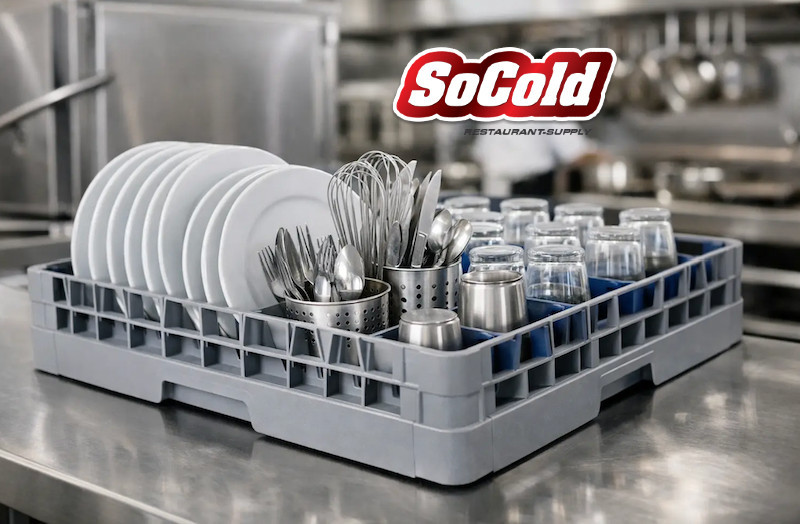
A commercial dish rack for restaurant kitchen use is not just a place to hold plates after washing. It determines how quickly staff can load the dishmachine, how well glassware and china are protected, and whether clean wares have a safe place to air-dry before service. A rack that does not match your dishroom setup creates avoidable breakage, slowdowns, and clutter at the worst possible time.
For most operations, the right choice comes down to four practical factors: rack type, ware size, dishmachine compatibility, and how clean items move from the dish area back to the line. Start there before comparing colors, brands, or per-rack price.
Start With the Dishroom Workflow
Watch the path of a dirty plate, glass, or pan through your operation. Staff should be able to scrape, sort, rack, wash, air-dry, and return items to storage with minimal handling. Every extra touch takes time and increases the chance of chips, cracks, or sanitation issues.
A high-volume restaurant may need enough racks to keep one load in the machine, one load ready to enter, and one load drying at the same time. A smaller cafe may need fewer racks but benefit from a layout that fits undercounter storage or a compact door-type machine. The right quantity depends on peak volume, not average volume during a quiet afternoon.
Also consider where racks will sit after washing. Clean wares should have adequate air circulation and stay protected from splash zones, dirty-dish traffic, and floor contamination. If the dishroom has limited landing space, open racks that can move directly from the machine to a storage shelf can reduce congestion.
Choose the Right Commercial Dish Rack Type
Commercial dish racks are designed around specific ware profiles. Using one general-purpose rack for everything may look economical at first, but it often leads to poor washing results and damaged wares.
Open Racks for Mixed or Oversize Items
Open racks have no internal compartments. They work well for sheet pans, mixing bowls, trays, large serving pieces, utensils, and irregularly shaped equipment that will not fit a standard plate or glass rack. They are also useful as drying and transport racks for items that need more room.
The trade-off is less protection. Open racks do not keep individual glasses or plates separated, so they are not the best choice for delicate stemware, tightly packed mugs, or high-value china.
Plate Racks for Dinnerware
Plate racks use divided rows to keep plates upright and separated during washing. They improve water circulation and help prevent plate-on-plate contact. Before ordering, measure your most commonly used plates, including rimmed plates, deep bowls, chargers, and oval serving ware.
A rack sized for standard dinner plates may not accommodate oversized pizza plates or wide-rim banquet china. Check both the plate diameter and the rack's inside height. A plate that sits too high can interfere with the dishmachine's wash arm or prevent the rack from sliding into the machine correctly.
Glass Racks for Beverage Service
Compartment glass racks protect glasses during washing, drying, storage, and transport. Each compartment separates individual pieces, reducing breakage and keeping glasses from knocking together. They are especially useful for bars, banquet operations, breweries, hotels, and restaurants with heavy beverage volume.
Measure the tallest glass in the rack, not just the most common one. Wine glasses, pint glasses, highballs, and specialty cocktail glasses can require different compartment sizes or extenders. If glasses are too tall for the rack, they may not wash properly or may contact the top of the dishmachine. If compartments are too large, glasses can shift during transport.
Flatware and Smallware Racks
Flatware cylinders and open racks allow water to reach forks, knives, and spoons while keeping them organized for sorting. For high-volume operations, loading flatware handles-down can improve wash exposure, but staff need appropriate safety practices when handling knives. Some operations separate knives for handwashing to reduce injury risk and protect blades.
Smallware racks are also useful for ramekins, lids, utensils, and prep tools that can fall through an open rack or flip during the wash cycle. The goal is to prevent standing water and keep small items from moving freely under high-pressure spray.
Verify Rack Size and Dishmachine Compatibility
Many commercial dishmachines use approximately 20-inch by 20-inch racks, but dimensions and clearances are not universal. Verify the rack footprint, guide spacing, door opening, and maximum clearance inside your machine before purchasing. This matters most with older equipment, compact machines, conveyor systems, and specialty warewashers.
Height is just as important as length and width. A glass rack with extenders may fit on a storage shelf but not fit through the dishmachine. Conversely, a short rack may wash easily but leave tall stemware exposed or unstable. Measure your tallest item from the base to the rim, then compare it with the rack's usable compartment height.
If you operate more than one dishmachine, standardizing rack dimensions can simplify training, storage, and replacement ordering. It also makes it easier for staff to move racks between dish areas during a rush.
Material and Construction Affect Daily Use
Most commercial dish racks are made from molded polypropylene or similar commercial-grade plastic. These materials are lightweight, resist moisture, and tolerate repeated exposure to dishmachine temperatures and chemicals. Open-grid construction improves water flow and speeds drying.
Look for reinforced corners, smooth edges, and stackable designs. Reinforced corners matter when racks are routinely moved on dollies, stacked in storage, or dropped into bus tubs. Smooth surfaces are easier to clean and less likely to snag gloves or towels.
Color can have a practical purpose. Some operations use different rack colors for bar glassware, dining room wares, and kitchen equipment. This is not necessary for every restaurant, but it can make sorting easier in institutional kitchens, multi-station operations, or locations with frequent staff turnover.
Buy for Capacity, Not Just Initial Cost
The cheapest rack is rarely the lowest-cost option if it cracks under normal use, does not protect your glassware, or forces staff to rerack items before washing. Commercial racks should be treated as working inventory. They move continuously through the dishroom, storage area, bar, banquet setup, and service floor.
Estimate the number of racks required for your busiest meal period. Factor in the machine cycle time, drying time, number of place settings, and the distance between dishwashing and point of use. A restaurant that runs out of clean racks may still have enough clean plates, but staff cannot process the next load efficiently.
Keep replacement racks and extenders on hand when the operation depends heavily on a specific rack style. This is particularly useful for franchises, hotels, catering operations, and facilities that use matching glassware across multiple service areas. A cracked rack can take more than one piece of ware out of circulation if it causes a stack to become unstable.
Plan Storage and Transport at the Same Time
Dish racks work best as part of a system. Shelving, dish carts, dollies, drain shelves, and bus tubs all affect whether staff can move wares safely. A fully loaded glass rack is heavy, awkward, and vulnerable to impact if employees carry it across a busy kitchen without a cart.
For glassware, select storage shelving that supports the rack base evenly. Avoid placing racks where they can overhang a shelf edge or sit near heat sources. For plates and smallwares, use a designated clean-rack area so washed items are not mixed with dirty racks waiting to be loaded.
If floor space is tight, stackability becomes more valuable. Just make sure stacked racks remain stable and that employees can reach them without lifting above a safe height. More vertical storage is not always better if it slows retrieval during service.
Keep Racks Clean and Replace Damaged Units
Dish racks need routine cleaning too. Food debris, labels, mineral buildup, and residue can collect in corners and grid sections, especially when racks handle prep tools or heavily soiled wares. Include racks in the dishroom cleaning schedule and inspect them regularly for cracks, broken dividers, and warped bases.
Damaged racks should be removed from service promptly. A broken divider can turn a protected glass rack into a breakage problem, while a warped rack may not travel properly through the dishmachine. Replacing individual racks early costs less than replacing broken glassware or dealing with a service delay.
The best rack choice supports the actual pace of your operation: it fits the machine, protects the wares you use most, and gives clean items a clear path back to service. Measure first, buy enough for peak demand, and keep compatible replacements available before the dishroom becomes the bottleneck.