 US Dollar
 Canadian

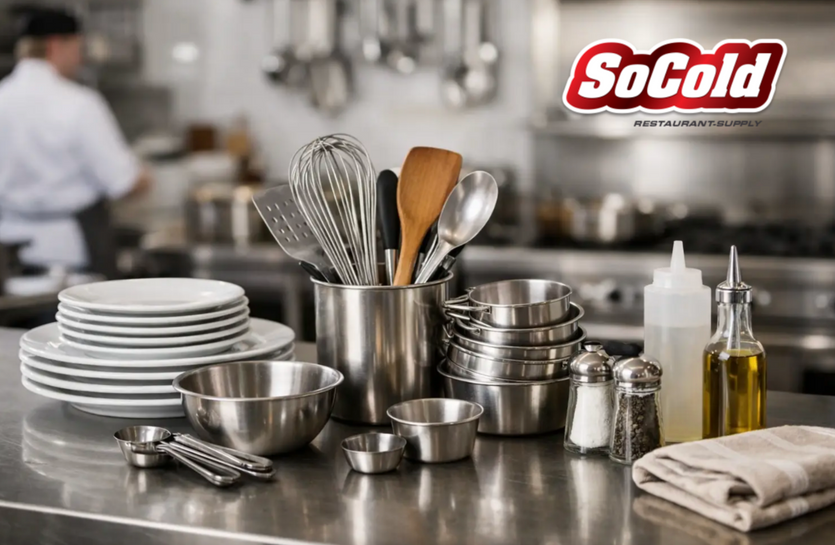
When a line cook is waiting on fresh tongs, the dish pit is short on racks, or a prep station burns through its last stack of deli containers before lunch, the best restaurant smallwares suppliers stop being a purchasing question and start being an operations question. Smallwares are low-ticket items compared with ovens or refrigeration, but they create outsized problems when they are missing, delayed, or inconsistent.
That is why supplier choice matters more than many buyers admit. A good smallwares source does not just offer spatulas, hotel pans, squeeze bottles, thermometers, and cutlery. It helps reduce ordering friction, supports standardization across locations, and keeps replacement cycles from turning into emergency buys at premium pricing.
What separates the best restaurant smallwares suppliers
For most operators, the right supplier is not the one with the longest catalog alone. Breadth matters, but usable breadth matters more. A supplier should carry everyday essentials, harder-to-find back-of-house items, sanitation-adjacent products, and enough adjacent categories that buyers are not forced into multiple carts across multiple vendors.
That matters because smallwares rarely get purchased in isolation. A kitchen manager replacing sheet pans is often also ordering dishmachine chemicals, food storage containers, aprons, prep tools, and maybe a replacement part for a slicer or ice machine. If one supplier can cover those needs in the same order, the savings show up in staff time, freight efficiency, and fewer stockouts.
Speed is the next separator. Smallwares are often replenishment items, but many purchases are triggered by breakage, theft, wear, failed health inspection readiness, or sudden volume spikes. Fast shipping and live inventory visibility are not conveniences. They directly affect service continuity.
Pricing still matters, of course, but the lowest unit price does not always produce the lowest operating cost. If a supplier is cheaper on ladles but weak on fill rates, substitutes products without warning, or makes reordering harder than it should be, the labor cost and disruption can erase the apparent savings.
How to evaluate best restaurant smallwares suppliers for your operation
The right comparison starts with your buying pattern, not the supplier's marketing. An independent restaurant with one kitchen has different needs than a multi-unit franchise, a healthcare facility, or a service company supporting several customer sites.
Single-unit restaurants need simplicity
For a single location, the best fit is usually a supplier with clear category organization, dependable stock on fast-moving items, and pricing that holds up on smaller but frequent orders. These buyers often do not have a dedicated procurement team. They need to find what they need quickly, reorder familiar SKUs without second-guessing, and add related supplies in the same session.
In this case, a broad-line restaurant supply source often makes more sense than a niche smallwares-only seller. You may pay a little more on a few individual items, but the operational gain from consolidating purchases can be worth it.
Multi-unit and franchise buyers need consistency
Chains and franchise groups usually care most about standardization. They need the same turner, the same pan size, the same storage bin, and the same disposable spec across locations. Supplier inconsistency creates training issues, portion-control drift, and avoidable purchasing noise.
For these buyers, the best restaurant smallwares suppliers support repeatability. That means stable SKU availability, strong replenishment depth, wholesale pricing logic, and enough inventory structure to make approved item ordering straightforward. A supplier that also carries equipment and replacement parts can be especially useful for franchise systems trying to centralize more of their spend.
Institutional kitchens need compliance and durability
Schools, hospitals, and correctional or corporate foodservice programs often buy against tighter specifications. NSF listings, food-safe materials, durability under heavy wash cycles, and predictable restocking matter more than trend-driven tabletop items.
These operators should look closely at product detail quality, not just category size. If the supplier makes it hard to verify dimensions, material types, compatibility, or case quantities, purchasing errors become more likely. That is not a small issue when one wrong order can affect service across a full meal period.
The trade-offs between broad-line and niche suppliers
There is no universal winner here. It depends on how your kitchen buys and what kinds of problems you are trying to prevent.
Broad-line suppliers tend to work well for operators who want one source for smallwares, disposables, chemicals, apparel, plumbing basics, equipment, and parts. That model reduces vendor sprawl and helps buyers place fewer, more complete orders. It is especially valuable when maintenance and operations overlap, which is common in real kitchens.
Niche smallwares suppliers can be useful when a buyer is focused on tabletop presentation, chef-driven specialty tools, or highly specific front-of-house aesthetics. They may offer deeper assortment in narrow categories. The downside is that they often create a second or third purchasing lane, which can slow down routine replenishment.
For most back-of-house buyers, utility usually beats specialization. A supplier that helps keep prep, storage, sanitation, and service moving has more day-to-day value than one with a beautiful but narrow assortment.
What buyers often overlook when comparing suppliers
One common mistake is treating smallwares as separate from uptime. In practice, they are tied together. If your supplier can also support replacement parts and operational basics, you reduce the time spent bouncing between vendors when something breaks midweek and regular replenishment still has to happen.
Another overlooked issue is pack size logic. Some suppliers are strong for large-volume institutional orders but awkward for smaller operators who need practical quantities. Others are fine for light buying but weak on case pricing and repeat replenishment. The best choice depends on whether your operation values bulk efficiency, order flexibility, or both.
Searchability also matters more than people think. Professional buyers do not want to hunt through lifestyle-oriented menus to find a bus tub, pan rack accessory, or thermometer probe. A supplier should organize products around the way kitchens actually buy - by task, equipment type, operational category, and familiar product naming.
Signs a supplier is built for real kitchen operations
You can usually tell within a few minutes whether a supplier understands foodservice. The strongest suppliers make common items easy to locate, carry compatible adjacent categories, and support urgent as well as planned purchases.
A practical supplier site should let a buyer move from prep tools to storage, from sanitation items to disposables, and from equipment to replacement parts without changing procurement habits. That kind of structure saves time for restaurant owners, chefs, maintenance leads, and procurement staff who are all solving different versions of the same problem: keeping service uninterrupted.
This is where a broad operational supplier like SoCold Products fits the market well. The value is not just smallwares availability. It is the ability to source daily-use items alongside chemicals, parts, equipment, and other operational essentials without fragmenting the order across multiple vendors.
Choosing based on speed, pricing, or assortment
If your operation runs lean on inventory, prioritize speed and stock reliability. Paying slightly more for fast access is often cheaper than comping meals, slowing prep, or sending staff on local store runs.
If your business has storage capacity and predictable demand, pricing and case-pack efficiency may deserve more weight. In that situation, a supplier with strong wholesale economics and reorder consistency can lower annual spend in a measurable way.
If your menus, stations, or service formats vary widely, assortment becomes more important. You will want a supplier with enough depth to handle standard kitchen tools plus the odd items that appear in bakery, bar, catering, buffet, or grab-and-go programs.
There is rarely a perfect score across all three. Most buyers need to decide what hurts most when it goes wrong: delay, cost, or product gaps.
A practical way to make the call
Start with your last 90 days of smallwares and operating supply purchases. Look at what was routine, what was urgent, what required a second vendor, and what caused delay or substitution headaches. Then compare suppliers against that real demand pattern rather than a generic checklist.
If one supplier can cover your core smallwares, related consumables, and at least some of your maintenance or parts needs, that usually creates the best operational outcome. It reduces purchasing time, improves order consolidation, and gives your team fewer places to check when something needs to be replaced fast.
The best supplier is usually not the flashiest one. It is the one that helps your kitchen keep moving on an ordinary Tuesday when nobody has time to chase a missing item, explain a substitution, or rebuild an order from scratch. Choose the source that makes routine buying easier and urgent buying less disruptive. That is where the real value shows up.
Best Restaurant Smallwares Suppliers Compared
21st May 2026