 US Dollar
 Canadian

A kitchen floor tells the truth fast. If the dish area is backing up, the fry station is throwing oil, or someone tracked water past prep, the wrong footwear shows up before the lunch rush is over. That is why non slip kitchen shoes for chefs are not a minor uniform detail. They are part of risk control, fatigue management, and keeping a crew moving without preventable slowdowns.
For operators and kitchen managers, footwear decisions usually come down to a simple question: what actually holds up in a commercial kitchen? Marketing language is cheap. Traction, comfort, cleanability, and replacement cost are what matter when shoes are used hard, cleaned often, and exposed to grease, soap, water, and long hours on tile or quarry floors.
What non slip kitchen shoes for chefs need to do
In a professional kitchen, slip resistance is the baseline, not the full job. A shoe can have a decent tread pattern and still fail if the outsole compound hardens too quickly, the upper absorbs spills, or the fit shifts during a fast turn at the line. The best options are built for movement under load, repeated cleaning, and all-day standing.
Grip matters most where conditions change minute to minute. A floor may be dry near garde manger, slick at dish return, and lightly greasy near sauté. That means outsole design has to handle more than one type of hazard. Deep channels can help move liquid away from the contact surface, but if they are too open, they can trap debris. A flatter pattern may clean more easily, but it can lose bite on contaminated surfaces. There is always a trade-off.
Comfort is not a luxury item in this category. A chef, line cook, or kitchen lead who spends ten to twelve hours on foot will feel the difference between proper support and a cheap foam insert by the middle of the shift. Poor footwear contributes to fatigue, slower movement, and more strain in the knees, hips, and lower back. If a shoe saves money up front but wears out feet and morale, it is not a good buy.
How to evaluate slip resistance without guessing
Many buyers make the mistake of judging a shoe by tread appearance alone. That is useful, but incomplete. The outsole material is just as important as the pattern. A sole that stays tacky and flexible in wet conditions will usually perform better than one that looks aggressive but turns stiff under heavy use.
Ask practical questions. Is the shoe designed specifically for foodservice environments, or is it a general work shoe being sold into kitchens? Does the sole perform on greasy tile, not just clean warehouse floors? Is the heel stable during quick pivots? Does the shoe keep contact with the floor evenly, or does it rock under pressure?
Weight also affects performance. A heavier shoe may feel durable, but it can wear people down over a long shift. A very light shoe may improve mobility, but if it lacks structure, it can lead to foot instability. In most kitchens, the best answer is a balanced build with enough support for all-day use and enough flexibility for quick movement.
Materials matter more than most buyers think
The upper material affects sanitation, durability, and replacement frequency. Leather can offer structure and decent lifespan, but it needs the right finish to handle spills and repeated wipe-downs. Synthetic uppers are often easier to clean and lighter in weight, which works well in high-turn environments where speed and maintenance matter.
Open mesh may feel cooler, but it is usually a poor fit for wet, greasy kitchen conditions. If hot liquid, oil, or food debris can pass through the upper, that is a problem. Ventilation matters, but protection usually matters more in a back-of-house setting.
Clog-style shoes are common because they are easy to clean and quick to put on, but they are not right for every operation. Some crews like the convenience. Others need a more secure fit with better heel retention, especially in kitchens where staff move fast between stations, walk ramps, or carry heavy loads. Lace-up styles can provide a more locked-in fit, but they also take longer to clean and can trap debris if poorly designed.
Fit, support, and why replacement cycles matter
A shoe that slips on the foot is almost as bad as a shoe that slips on the floor. Heel movement creates friction, causes fatigue, and reduces confidence during fast directional changes. Toe room should be adequate without letting the foot slide forward. Midfoot hold matters more than many buyers realize because it keeps the foot stable during turning and side-to-side movement.
Arch support is highly individual. There is no universal best shape. Some staff do well with built-in support, while others need room for an aftermarket insole. For managers buying for teams, that flexibility can matter. If a shoe design cannot accommodate basic comfort adjustments, it may create more complaints than it solves.
Replacement timing is another operational issue. Non slip performance does not last forever. Tread wears down, outsole compounds lose their grip, and insoles compress. Shoes that still look acceptable can already be underperforming. In high-volume kitchens, it makes sense to inspect footwear as a safety item, not just a uniform item. If someone is starting to slide where they did not before, the shoe may be at the end of its useful life.
Choosing the right non slip kitchen shoes for chefs by kitchen type
Not every kitchen puts the same demands on footwear. A fine dining line with tighter station work may prioritize lighter movement and a cleaner profile. A high-volume casual concept may need tougher outsoles and easier cleanup. Institutional kitchens, commissaries, and school foodservice operations often put more emphasis on long walking distances, repeated wet-floor exposure, and cost control across larger teams.
If the dish area is the highest-risk zone, choose shoes with strong wet traction and easy washdown characteristics. If expo and front-adjacent open kitchens are part of the operation, appearance may matter more, but it should not override safety and support. If staff regularly move product, bus racks, or ingredient totes, stability and heel control become more important than minimalist comfort.
This is where procurement discipline helps. Standardizing too aggressively can backfire if one model does not suit different roles. On the other hand, allowing unlimited variation creates inconsistency and makes replacement ordering messy. A practical middle ground is approving a short list of kitchen-suitable models by job function.
Cost per wear beats cheap purchase price
The lowest-priced option is often the most expensive over time. If a pair breaks down early, loses grip fast, or drives staff to replace it out of pocket after a few months, that is not a savings. Good kitchen shoes earn their keep by reducing incident risk, lasting through repeated use, and helping staff finish shifts with less fatigue.
There is also the hidden cost of bad footwear decisions. One slip incident can mean medical costs, scheduling disruption, paperwork, and lost productivity. Even near-misses affect pace and confidence. In a tight labor market, crews notice whether management treats footwear as an operational necessity or an afterthought.
For owner-operators and multi-unit buyers, it helps to think in terms of total use. How many shifts will the shoe realistically survive in your environment? How easy is it to clean at the end of service? Will staff actually want to wear it, or will compliance be a fight? Those answers matter more than a low line-item number.
What to look for before you place an order
Product descriptions should make it easy to confirm the basics. Look for outsole construction intended for commercial kitchen use, uppers that can handle wipe-down cleaning, and a fit profile that matches the work being done. If sizing tends to run narrow or wide, that should factor into the decision, especially for team purchasing.
It also helps to keep replacement ordering simple. Operations run better when buyers can source apparel, smallwares, cleaning products, and back-of-house essentials from one place instead of chasing basic items across multiple vendors. For kitchens already managing parts, disposables, chemicals, and service needs, reducing purchasing friction matters. That is one reason buyers often prefer a supply partner like SoCold Products that understands restaurant operations rather than treating kitchen footwear like a generic retail item.
The right shoe will not fix bad floor care or poor drainage, and it will not replace common-sense safety habits. But it gives chefs and kitchen staff a more stable platform to do the work. When the floor gets slick and the pace picks up, that difference is not theoretical. It shows up in every turn, every carry, and every hour still left in the shift.
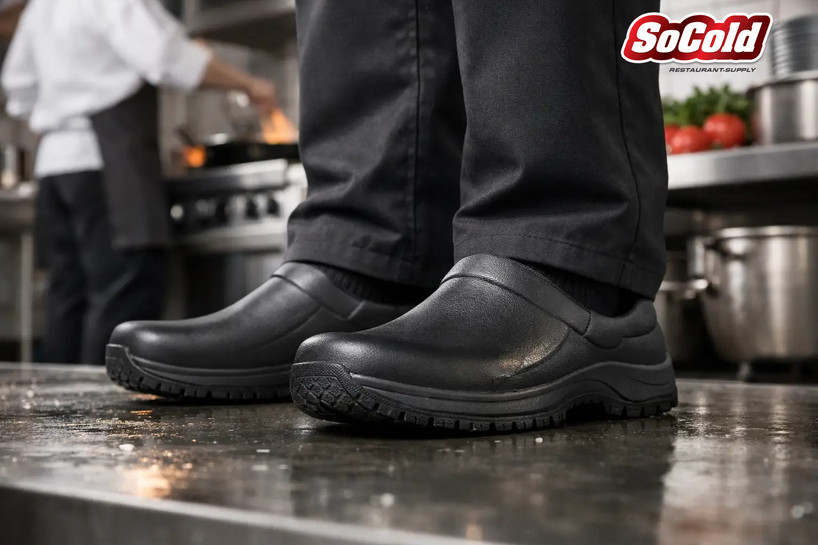
Best Non Slip Kitchen Shoes for Chefs
29th May 2026