 US Dollar
 Canadian

Opening a kitchen without a purchase plan is how budgets get burned before the first ticket prints. The best commercial kitchen starter equipment is not the longest equipment list or the most expensive package. It is the right mix of production capacity, code compliance, labor efficiency, and serviceability for the menu you actually plan to run.
That matters because first-time buyers often overbuild the cookline and underbuy the support items that keep service moving. A six-burner range gets attention. Shelving, food pans, dish tables, filters, sanitizer, and replacement parts usually do not. In real operations, those smaller categories decide whether prep stays organized, sanitation stays on track, and downtime stays manageable.
How to choose the best commercial kitchen starter equipment
Start with volume, menu, and footprint. A breakfast cafe, a burger concept, and a school kitchen can all spend the same amount and end up with very different results. If your menu is griddled and fried, spend more on ventilation-compatible cooking equipment and grease management. If your business is prep-heavy and cold-hold driven, refrigeration and worktables deserve more of the budget than extra burners.
The second filter is utility capacity. Gas, electric, water, drainage, and hood requirements will narrow your options fast. A piece of equipment that looks cheaper up front can become the more expensive choice if it forces electrical upgrades, suppresses workflow, or creates service bottlenecks. The best starter setup is usually the one that fits the room cleanly and can be maintained without custom workarounds.
Service access also deserves attention early. Equipment will need gaskets, knobs, ignitors, thermostats, and other wear parts. Buying common, field-serviceable units with parts availability is usually smarter than chasing a low purchase price on obscure equipment that becomes a problem six months later.
The core equipment every startup kitchen should price first
For most commercial kitchens, the first dollars should go to cooking equipment, refrigeration, stainless work surfaces, warewashing support, and storage. Those are the categories that determine whether you can receive product, prep safely, hold temperature, execute service, and clean back down without slowing the next shift.
Cooking equipment
Your cookline should match your top-selling menu items, not your wish list. A range with oven remains a practical starter choice for many restaurants because it handles multiple cooking methods in one footprint. A countertop griddle makes sense when breakfast sandwiches, burgers, quesadillas, or seared items are core revenue drivers. Fryers earn their keep quickly in high-volume concepts, but only when paired with filtration, proper baskets, splash control, and the right hood coverage.
Combi ovens, charbroilers, and specialty ovens can be worth the spend, but they are not automatic starter purchases. If a piece of equipment only supports one or two menu items and creates utility or ventilation complications, it may be better as a phase-two buy.
Refrigeration and cold holding
Reach-in refrigerators and freezers are usually non-negotiable, but the exact mix depends on delivery frequency and prep cadence. If you receive product several times per week and have limited back-of-house space, one reach-in cooler and one freezer may be enough to open. If your concept depends on ingredient access during service, undercounter refrigeration or prep tables can do more for speed than adding another upright box in the back.
Temperature consistency matters more than sticker price. A cheaper refrigerator that struggles to recover during line opening can cost more in product loss and labor delays than a better unit with stable performance. Startup buyers should also account for shelving layout, pan compatibility, and door swing before ordering.
Prep and work surfaces
Stainless steel worktables, sinks, and shelving are rarely the exciting part of an opening, but they are where production lives. A kitchen with adequate prep space runs faster, cleaner, and with fewer cross-traffic problems. At minimum, most operations need a designated receiving or staging table, a prep table near cold storage, and a landing area near the cookline.
Compartment sinks, hand sinks, and mop sinks should be planned around code and workflow together. It is a mistake to treat sink packages as a paperwork issue only. If staff have to walk around racks, trash cans, or hot equipment to wash hands or rinse tools, compliance slips under pressure.
Warewashing and sanitation support
Some small operations can open with a three-compartment sink and disciplined procedures. Others need a commercial dishwasher immediately because labor, local code, or service volume demands it. The right answer depends on throughput. If dish accumulation can choke production or front-of-house service, delaying machine warewashing often becomes false economy.
Do not separate sanitation chemicals, test strips, drying racks, dish tables, bus tubs, and waste handling from the warewashing budget. They are part of the system. The same applies to floor cleaning tools, degreasers, liners, paper products, and dispensers. Cleanability is not an accessory category in a commercial kitchen.
Best commercial kitchen starter equipment by concept
The best commercial kitchen starter equipment for a cafe is different from what a ghost kitchen needs. A cafe may need more cold display, beverage support, and compact cooking. A ghost kitchen usually benefits from production-focused hot holding, delivery staging, and dense cold storage. A pizza shop may prioritize dough handling, proofing, refrigeration, and the oven before anything else.
For fast casual, the usual pressure points are line speed and ingredient access. Prep tables, ingredient bins, food pans, heat lamps, and shelving often improve output more than adding premium cooking equipment. For institutions, durability and easy parts replacement matter more because downtime affects larger meal counts and fixed service windows.
That is why package deals should be reviewed carefully. Bundled equipment can be useful, but only if the package reflects your actual menu and service model. Paying for underused pieces while missing essential smallwares is a common opening mistake.
Where to save and where not to save
Used equipment can make sense for stainless tables, shelving, and some heavy-duty pieces if condition, utility compatibility, and local code all check out. It is less attractive when service history is unclear or parts support is poor. Refrigeration, ice machines, and dishmachines deserve more caution because repair costs and sanitation issues can erase the initial savings quickly.
Smallwares are another place buyers misjudge value. Buying the cheapest pans, knives, containers, thermometers, or cutting boards often leads to fast replacement cycles. You do not need premium everything, but you do need items that can handle commercial use. The same is true for gaskets, filters, and cleaning supplies. Cheap consumables that fail early tend to create labor headaches that are harder to track on paper.
Ventilation is the category where cutting corners usually backfires. If the hood, suppression coverage, and makeup air are not right, the rest of the kitchen plan will keep colliding with compliance, heat, and performance issues.
Don’t forget the support categories
A startup kitchen is not ready because the big boxes arrived. It is ready when the line has pans, lids, thermometers, scales, sheet pans, storage containers, gloves, aprons, towels, sanitizer, casters, dunnage racks, and trash handling in place. It is also ready when basic replacement parts are accounted for. Door gaskets, pilot components, fryer accessories, faucet parts, and common wear items are worth stocking early if they are critical to daily operation.
This is where working with a supplier that covers equipment, smallwares, chemicals, disposables, plumbing items, and replacement parts can save time and prevent gaps. Buyers do not need more vendor coordination during an opening. They need fewer surprises.
Build for the first year, not just opening day
The strongest starter equipment plans leave room for menu learning and labor realities. If you expect to add catering, expand dayparts, or increase delivery volume, think about what can scale without forcing a full reset. Mobile equipment, standardized pan sizes, modular shelving, and common replacement parts all make growth easier.
At the same time, avoid buying for hypothetical demand that has not shown up yet. Empty capacity ties up cash and floor space. It is usually better to open with dependable core equipment, strong prep and sanitation support, and a clear replenishment path for everything else.
A practical opening budget is not about buying less. It is about buying in the order your kitchen needs to function, recover from wear, and keep producing when the rush hits.
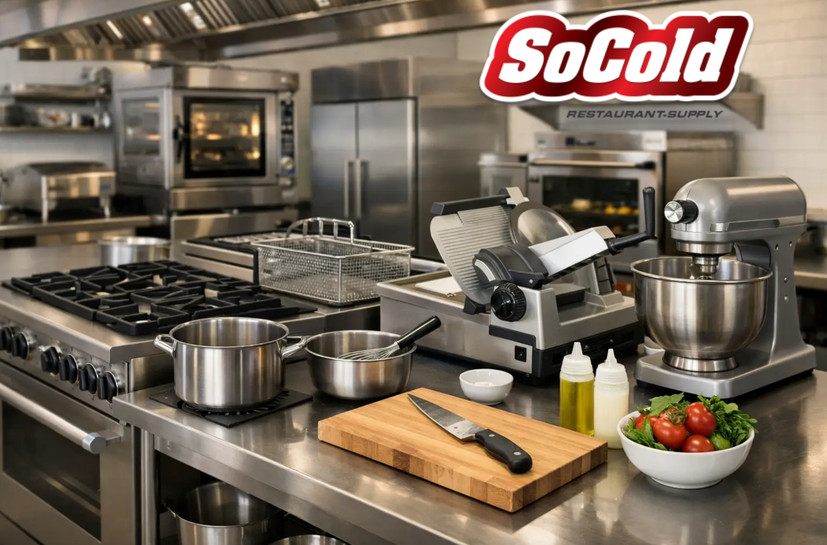
Best Commercial Kitchen Starter Equipment
Posted by Steve MM on 1st Jun 2026