 US Dollar
 Canadian

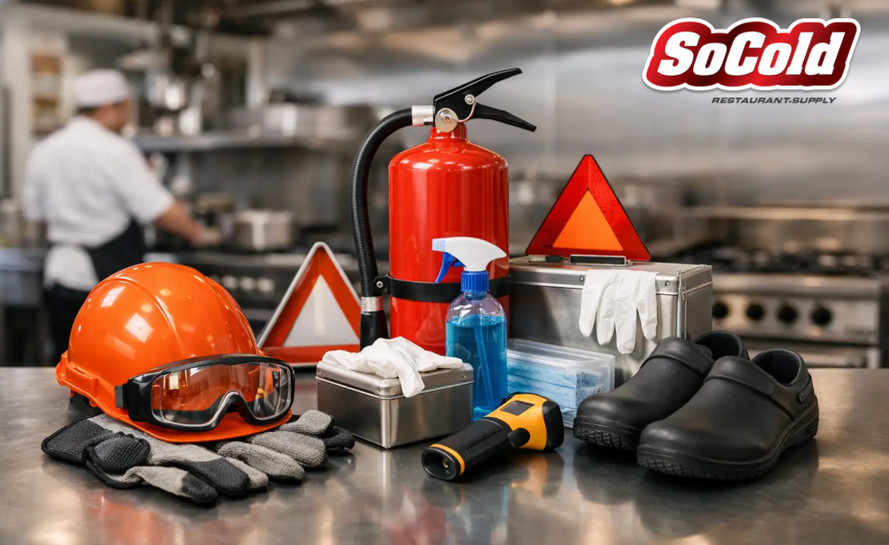
A single slip at the dish station or a minor fryer burn during peak service can turn into lost labor, comp claims, and a backed-up line fast. The best commercial kitchen safety supplies are the ones that prevent routine hazards without slowing down production, and they need to fit the way your kitchen actually runs.
For most operators, safety buying gets split into separate buckets - janitorial, PPE, first aid, chemical handling, and equipment accessories. That works until something gets missed. A better approach is to stock safety supplies by risk area, then standardize replenishment so critical items are always on hand.
What the best commercial kitchen safety supplies need to do
In a commercial kitchen, safety products are not just compliance items. They protect labor, reduce downtime, and help managers avoid preventable service disruption. The right supply mix should address the most common injury and contamination risks: slips, cuts, burns, chemical exposure, poor air quality, and emergency response.
That does not mean buying the most expensive version of everything. It means choosing products that hold up to heavy use, are easy for staff to use correctly, and can be reordered without delay. A cheap floor sign that cracks in a week or gloves that staff refuse to wear are not savings.
Floor safety comes first
If you have to prioritize one category, start with the floor. Wet tile, grease migration, and overspray around sinks and ice machines create the most common injury risk in foodservice. Anti-fatigue and anti-slip floor mats are one of the highest-value safety purchases because they do two jobs at once - they improve footing and reduce strain for staff standing for long periods.
Placement matters more than quantity. Mats should be installed where water, grease, and repeat foot traffic intersect: dish areas, cook lines, bar pass-throughs, and prep sinks. If mats slide, curl, or are hard to clean, they become part of the hazard. That is the trade-off with low-cost options. They may reduce upfront spend but increase replacement frequency and cleaning labor.
Wet floor signs and cones are basic, but they still matter. In fast-moving kitchens, portable warning signs are most useful when they are lightweight, visible, and close to the cleanup point. If they are stored across the building, staff will skip them.
Cut protection should match the task
Knife work, slicers, can openers, and broken glass all create cut risk, but not every station needs the same level of protection. The best commercial kitchen safety supplies in this category usually include cut-resistant gloves, mesh gloves for specific prep applications, finger guards, and bandages designed for foodservice use.
Cut-resistant gloves are a good example of where fit matters. Gloves that are too bulky reduce dexterity and get ignored. Gloves that are too light may not be appropriate for high-risk prep. For line prep and produce work, many kitchens do well with lightweight cut-resistant gloves that can be worn without slowing production. For butcher or heavy prep applications, a higher cut rating may make more sense, even if it feels less flexible.
Blue detectable bandages are the standard for a reason. They are easier to spot if lost in food, and many are metal detectable as well. This is a small purchasing detail that has real operational value.
Burn protection needs to go beyond oven mitts
Burn risk is not limited to ovens. Steam tables, fryers, hot holding cabinets, kettles, and dishwasher exits all create exposure points. Heat-resistant gloves, sleeve protection, and aprons are worth evaluating by station, not as a one-size-fits-all buy.
The common mistake is stocking only basic dry-use mitts. In real kitchens, moisture is part of the environment, and some heat protection performs poorly when wet. Staff handling steam pans or working near boiling liquids may need gloves rated for both heat and grip. Fry stations may need longer cuff coverage to reduce splash burns.
This is also where replacement cycles matter. Worn, saturated, or damaged heat-protection gear should not stay in circulation because it still looks usable. Managers who build these items into routine supply checks usually get better compliance than teams that replace them only after an incident.
Chemical safety is often underbought
Cleaning chemicals, delimers, degreasers, sanitizer concentrates, and warewashing products are essential, but they also create avoidable exposure risks when dispensing and storage are poorly managed. Chemical-resistant gloves, splash goggles, aprons, and labeled spray bottles should be treated as standard operating supplies, not optional accessories.
Different chemicals require different glove materials, so it is worth checking compatibility instead of assuming one glove works for everything. Light disposable gloves may be fine for some low-risk tasks, but stronger chemical handling often calls for more durable protection. If staff transfer product manually, measuring tools and dispensing accessories can reduce both overuse and exposure.
Clear labeling supports both safety and cost control. Unmarked bottles and mixed containers create risk fast, especially with turnover in the back of house. Standardized labels and secondary container systems are low-cost controls that prevent bigger problems.
First aid supplies should be built for foodservice
Every commercial kitchen needs a first aid kit, but generic office kits usually miss what food operations actually need. The better setup includes burn treatment, blue bandages, finger cots, gloves, antiseptic wipes, gauze, and easy-to-access refill items.
The biggest issue is not whether a kit exists. It is whether the right items are available after the first few uses. A half-empty first aid cabinet gives managers false confidence. Refillable kits and station-specific backup supplies work better in larger operations, especially where prep, dish, and hot line areas are spread out.
Eye wash is another category that gets overlooked until it is urgent. Kitchens using chemicals, dealing with splash risk, or cleaning fryers and dish machines should consider accessible eye wash solutions in addition to standard first aid supplies.
Fire safety support items matter at the equipment level
Major fire suppression and extinguishing systems fall into broader facility planning, but kitchens still need supporting supplies around live equipment. Non-slip mats near fryers, splash guards where appropriate, grill and fryer cleaning tools with extended reach, and proper waste oil handling accessories all reduce fire and burn exposure during routine operation.
This is where purchasing teams should think beyond the emergency itself. A safer cleaning process around hot equipment lowers the chance of incidents before suppression systems ever come into play. Long-handle tools, oil-resistant gloves, and containers designed for hot grease handling are practical safety purchases because they support everyday use.
PPE works only when staff will actually use it
Disposable gloves, aprons, face shields, beard covers, masks where needed, and non-slip footwear all belong in the broader safety picture. But compliance depends on comfort, fit, and availability. If PPE is stored too far from the task or constantly out of stock, usage drops.
Non-slip shoes are technically not always a supply item in the same sense as janitorial stock, but they are still one of the most important safety controls in the building. For employers setting footwear policies, consistency matters more than casual recommendations. A kitchen with strong floor mat coverage and poor footwear compliance is still exposed.
For disposable items, stocking the right size mix is basic but important. One-size-fits-all purchasing usually leads to waste and poor use.
Signage and storage support safer routines
Some of the best commercial kitchen safety supplies are simple controls that keep teams organized. Safety signage, label systems, wall-mounted dispensers, sharps containers where needed, and dedicated storage for gloves, aprons, and first aid items help reduce confusion during service.
Wall-mounted glove and paper towel dispensers near prep and sanitation points improve both hygiene and speed. Labeled storage for chemicals and PPE reduces cross-use. These are not dramatic upgrades, but they make safety supplies visible and usable, which is what drives results.
How to buy for fewer gaps and less downtime
Most kitchens do not need more safety categories. They need better coverage across the basics. Start by walking the operation in zones: receiving, prep, hot line, dish, storage, and janitorial. Then match each zone to its likely risks and confirm the related supplies are stocked, accessible, and easy to reorder.
It also helps to separate everyday consumables from incident-response items. Gloves, floor signs, sanitizer accessories, and detectable bandages need recurring replenishment. Burn care, eye wash, and backup first aid stock need routine inspection even if they are not used often.
For multi-unit operators, standardization can save real time. Using the same glove types, mat specs, first aid refill components, and labeling systems across locations simplifies training and purchasing. That is one reason buyers work with broad-line suppliers like SoCold Products - it is easier to source both routine safety stock and harder-to-find operational items in one place instead of chasing multiple vendors.
The best safety supplies are not the ones that look complete on a checklist. They are the ones your team can reach, use, and replace without thinking twice. If a product reduces injury risk and keeps service moving, it has already earned its shelf space.